

The first heavy rain of December hits, and you notice it again water pooling near your foundation, a soggy patch that never seems to dry out, or mud tracked through your home for days afterward. You tell yourself you’ll deal with it in the spring when things dry out. But here’s the truth: winter is actually when poor drainage does its worst damage to Oklahoma yards, and waiting could mean facing thousands in repairs you didn’t see coming.
If you’re a homeowner in the Norman, Moore, or Edmond areas, you’ve probably experienced those unpredictable winter storms that dump inches of rain overnight, followed by a hard freeze just days later. That cycle rain, freeze, thaw, repeat creates the perfect conditions for drainage problems to escalate from minor annoyances into serious threats to your property. The best landscape drainage solutions to prevent water damage in yards aren’t just about convenience; they’re about protecting your family’s most valuable asset from the kind of hidden damage that shows up in cracked foundations, eroded soil, and dying landscaping.
Let’s walk through why winter drainage matters so much, what actually causes problems in Oklahoma yards, and most importantly what you can do about it before the next storm rolls through.
Why Winter Is the Worst Season for Poor Drainage in Oklahoma
Most homeowners think of summer storms as the biggest drainage challenge, but winter presents unique risks that catch people off guard. Oklahoma’s winter weather pattern alternating between heavy rainfall, occasional ice storms, and freezing temperatures creates conditions that amplify drainage issues exponentially.
When water saturates your soil and then freezes, it expands. That expansion creates pressure against foundations, retaining walls, and even underground pipes. When temperatures rise again, the ice melts, leaving voids and weakened structures behind. This freeze-thaw cycle happens repeatedly throughout an Oklahoma winter, and each cycle compounds the damage.
Here’s what happens in a typical scenario: December brings three inches of rain over a weekend. Your yard’s existing drainage can’t handle the volume, so water pools against your home’s foundation. Temperatures drop to 28 degrees that night, and the saturated soil freezes solid. Two days later, it warms back up to 55 degrees. The frozen water melts, but the soil structure has been compromised. The next rain creates even worse pooling because the ground can’t absorb water as effectively anymore.
Over the course of one winter, this pattern can:
- Create hairline cracks in foundations that widen over time
- Cause soil erosion that undermines retaining walls and hardscape features
- Kill grass, shrubs, and trees whose roots suffocate in waterlogged soil
- Create ice patches on walkways that become safety hazards
- Promote mold and mildew growth in areas that stay perpetually damp
- Wash away mulch, decorative borders, and carefully placed landscaping elements
The financial impact can be staggering. Foundation repairs typically start around $5,000 and can easily exceed $20,000 for serious damage. Replacing dead landscaping, fixing eroded areas, and restoring hardscape features adds thousands more. Compare that to proactive drainage solutions that prevent these problems before they start, and the value becomes crystal clear.
Identifying Drainage Problems Before They Become Emergencies
Many homeowners in the Oklahoma City metro area live with drainage issues for months or even years before recognizing them as serious problems. They’re easy to dismiss “It’s just a little standing water,” or “That’s always been a soggy spot” until something breaks.
Here’s how to assess whether your property has drainage vulnerabilities that need attention:
Obvious Warning Signs
Standing water that persists for more than 24 hours after rain: This indicates your soil can’t absorb water quickly enough or that water has nowhere to go. In Oklahoma’s heavy clay soils, this is especially common and concerning.
Water pooling within 10 feet of your foundation: Any water collecting near your home’s perimeter is actively working to undermine your foundation’s integrity. Even small amounts create risk over time.
Erosion channels or gullies forming in your yard: When you start seeing defined pathways where water flows during storms, that’s soil being carried away soil that used to support your landscaping and stabilize your property.
Cracks in foundation walls, basement moisture, or damp crawl spaces: These are often the first visible signs that drainage problems have progressed beyond the yard and started affecting your home’s structure.
Dying plants or grass in areas that should be thriving: Plants drowning in oversaturated soil will show stress similar to underwatered plants yellowing, wilting, or simply failing to grow but the soil will feel soggy and dense.
Subtle Indicators Most Homeowners Miss
Soil that stays soft and squishy even days after the last rain: This suggests poor percolation, often due to compacted clay or an underlying hardpan layer preventing drainage.
Mosquito breeding in yard puddles: Standing water becomes a health hazard, not just a landscape nuisance.
Water stains on exterior walls or near the base of your home: These streaks indicate repeated water exposure that’s gradually causing damage.
Excessive moss growth in certain areas: While moss is beautiful in the right context, widespread moss in your yard signals areas of chronic moisture that aren’t drying properly.
Settling or sinking in hardscape areas like patios or walkways: When the soil beneath these features becomes oversaturated, it loses its ability to support weight, leading to uneven surfaces and eventual structural failure.
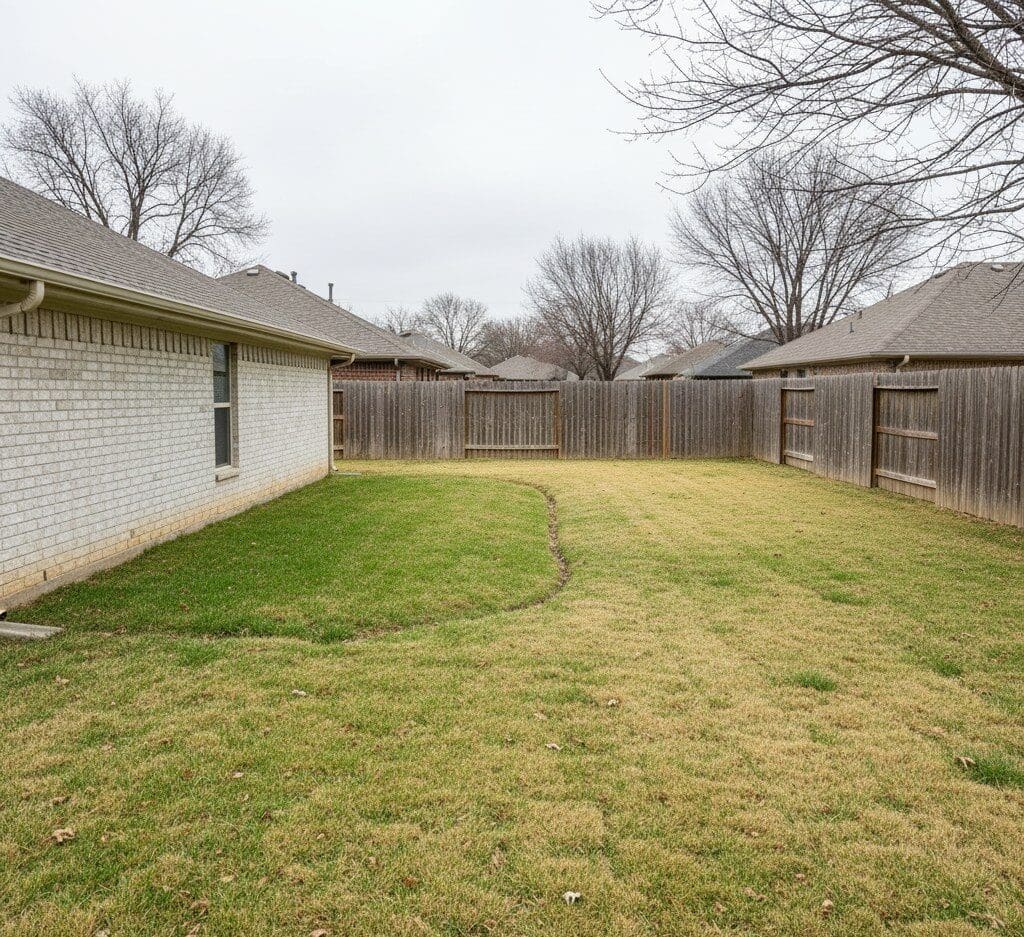
Consider a family in Norman whose backyard sloped gently toward their home not dramatically, but enough that every significant rain sent water sheeting across their patio and pooling against their back wall. For three years, they dealt with it by using towels to soak up water that seeped under their back door. They finally called for help when they noticed a crack forming in their foundation wall. A proper drainage solution involving regrading and a dry creek bed eliminated the problem entirely, but the foundation crack required additional repairs that could have been avoided with earlier intervention.
The Best Landscape Drainage Solutions to Prevent Water Damage in Yards
Effective drainage isn’t about one-size-fits-all solutions. It’s about understanding how water moves across your specific property and designing a system that redirects it safely away from vulnerable areas. Here are the most effective approaches for Oklahoma properties:
French Drains: The Underground Workhorse
A French drain is a trench filled with gravel and a perforated pipe that collects and redirects water underground. It’s one of the most versatile and effective drainage solutions available, particularly for properties with chronic standing water issues.
How it works: Water naturally flows toward the lowest point. A French drain is installed in a trench that slopes away from problem areas, allowing water to enter through the perforated pipe and travel underground to a safe discharge point typically a drainage easement, street gutter, or dry well.
Best applications:
- Preventing water from pooling near foundations
- Draining low spots where water consistently collects
- Intercepting water flowing down slopes before it reaches structures
- Managing runoff from downspouts and hard surfaces
Why homeowners choose them: French drains work invisibly. Once installed and covered with soil and grass, you’d never know they’re there but you’ll definitely notice that water problems have disappeared.
Dry Creek Beds: Beautiful and Functional
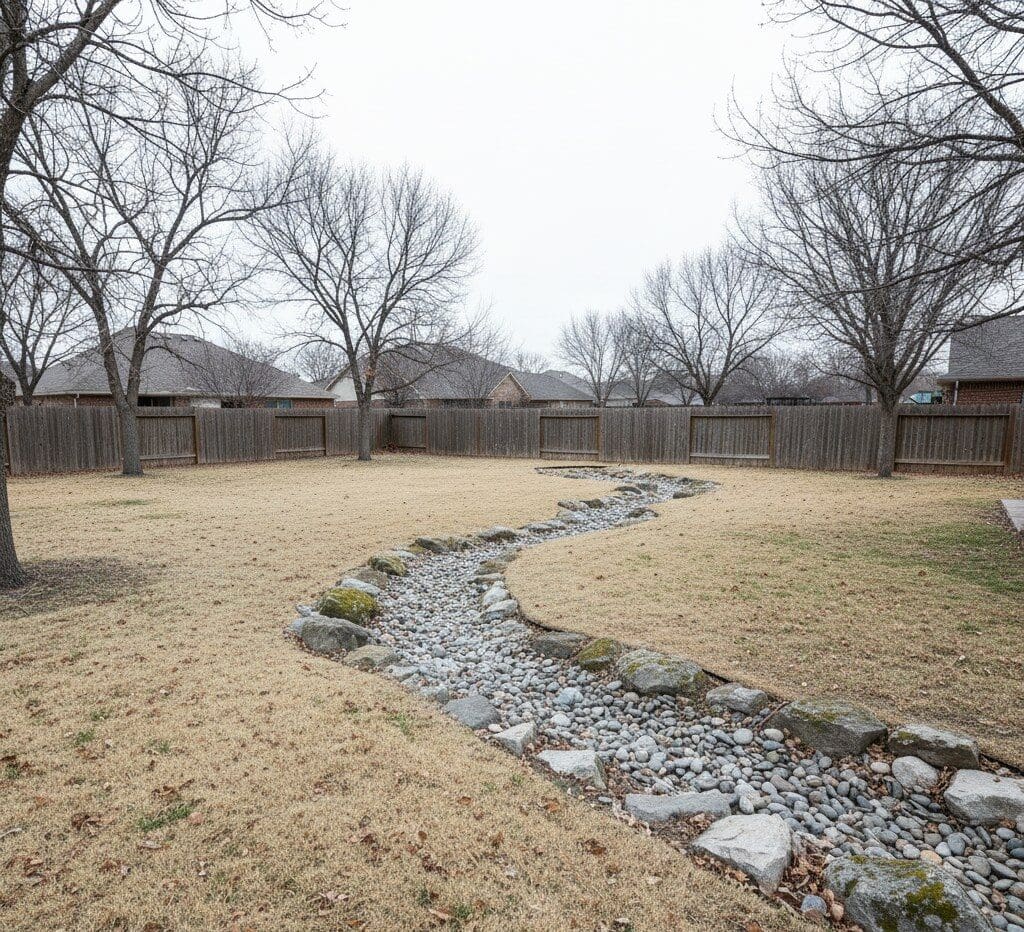
A dry creek bed is exactly what it sounds like a designed channel filled with river rock and boulders that mimics a natural streambed. During dry weather, it’s an attractive landscape feature. During storms, it becomes a functional drainage channel.
How it works: Water flows through the rock-filled channel, slowing down and spreading out rather than rushing in concentrated streams that cause erosion. The rocks also allow water to gradually infiltrate into the soil rather than running off your property entirely.
Best applications:
- Creating attractive drainage along slopes
- Managing runoff from large paved areas
- Solving erosion problems in natural drainage paths
- Adding visual interest while solving functional problems
Design considerations: A well-designed dry creek bed looks like it belongs on your property naturally. It should follow the land’s natural contours and include varied rock sizes, native plantings along the edges, and perhaps a small bridge or stepping stones for added charm.
Regrading: Fixing the Fundamental Problem
Sometimes the issue isn’t a lack of drainage infrastructure it’s simply that your yard slopes in the wrong direction. Regrading involves reshaping the soil to create proper slope away from structures and toward appropriate drainage points.
How it works: Industry standards call for a minimum slope of 2% (about 1/4 inch per foot) away from foundations for the first 10 feet. Many Oklahoma properties were graded improperly during construction, or settling has altered the original grading over time.
Best applications:
- Properties where water flows toward the home instead of away
- Yards with multiple low spots that collect water
- Sites where erosion has changed the natural drainage patterns
- New construction or major landscape renovations
Important note: Proper regrading requires understanding where water needs to go. It’s not just about creating slope it’s about directing water to safe discharge points without creating problems for neighbors or overwhelming existing drainage systems.
Retaining Walls with Integrated Drainage
Retaining walls serve double duty: they create level spaces on sloped properties while also managing water flow. A properly designed retaining wall includes drainage features that prevent water from building up behind it, which can cause catastrophic failure.
How it works: Retaining walls should include a drainage system behind them typically gravel backfill and a perforated pipe that allows water to pass through rather than accumulating. Weep holes in the wall face provide additional drainage paths.
Best applications:
- Creating terraced landscapes on sloped properties
- Preventing soil erosion on steep grades
- Managing water flow while adding usable space
- Protecting structures at the base of slopes
Why drainage integration matters: A retaining wall without proper drainage is a disaster waiting to happen. Hydrostatic pressure from water buildup can push walls over, regardless of how strong the construction is. If you’re considering retaining wall installation for your Oklahoma property, ensure drainage is incorporated into the design from the beginning.
Swales and Berms: Natural Landscape Solutions
Swales are shallow, vegetated channels that slow and redirect water flow. Berms are raised mounds of soil that direct water away from sensitive areas or help create variation in flat landscapes.
How they work: Swales use gentle slopes and vegetation to manage water naturally, allowing it to infiltrate slowly while moving it toward safe discharge points. Berms redirect water flow by creating physical barriers that guide water along desired paths.
Best applications:
- Large properties with enough space for natural solutions
- Situations where underground drainage isn’t practical or necessary
- Creating habitat for native plants while solving drainage issues
- Managing sheet flow across broad areas
Downspout Extensions and Underground Drainage
Many drainage problems start at the roofline. If your downspouts discharge water right next to your foundation, you’re concentrating hundreds of gallons of roof runoff in the worst possible location.
How it works: Downspouts are extended through underground piping to discharge water at least 10 feet from the foundation, ideally connecting to a larger drainage system or safe dispersal area.
Best applications:
- Every home should have proper downspout management
- Properties with basement moisture or foundation concerns
- Situations where surface extensions would create trip hazards
- Connecting to larger drainage systems like dry creek beds or French drains
Choosing the Right Solution for Your Property
The most effective approach often combines multiple strategies tailored to your property’s unique characteristics. Here’s how to think through what you need:
For homes on flat lots with clay soil: French drains combined with proper grading typically provide the best results. The drains collect water that can’t infiltrate quickly enough, while grading ensures water moves toward the drains rather than pooling.
For properties on slopes: Retaining walls with integrated drainage, combined with dry creek beds or swales to manage runoff, create both functional and beautiful solutions. The key is intercepting water before it gains speed and causes erosion.
For yards with existing erosion problems: Dry creek beds placed in natural drainage pathways stabilize soil while managing water flow. Combine them with erosion control plantings for long-term stability.
For properties with foundation concerns: Comprehensive solutions that include regrading, French drains near the foundation, and proper downspout management provide multiple layers of protection.
For homeowners who want low-maintenance solutions: Underground systems like French drains require minimal upkeep once installed. Dry creek beds need occasional rock rearrangement after major storms but otherwise maintain themselves. For those seeking low-maintenance landscaping approaches throughout their Oklahoma property, integrated drainage solutions complement these strategies perfectly.
What to Expect: Investment and Installation
One of the most common questions homeowners ask is: “How much does this actually cost?” The honest answer is that it varies significantly based on the scope of work, but understanding the factors that influence cost helps you make informed decisions.
Factors That Affect Drainage Project Costs
Site accessibility: Can equipment easily reach work areas, or will the project require hand-digging and manual material transport? This dramatically impacts labor costs.
Soil conditions: Oklahoma’s heavy clay requires more excavation effort than sandy loam. Rocky soils add time and potential equipment wear.
Scope and scale: A single French drain to solve a localized problem costs far less than comprehensive site regrading with multiple integrated drainage features.
Materials and finishes: Basic river rock costs less than premium boulders and natural stone. The level of detail and aesthetic finish you want affects the investment.
Existing landscape preservation: Working around mature trees, established plantings, and existing hardscape requires more precision and time than starting with a blank canvas.
General Investment Ranges
For perspective (not quotes every property is unique):
- Basic French drain (50 linear feet): Often ranges from $2,500 to $5,000
- Decorative dry creek bed with quality stone: Typically $3,500 to $8,000 depending on size and materials
- Significant regrading and drainage work: May range from $5,000 to $15,000 for comprehensive solutions
- Retaining wall with integrated drainage: Usually starts around $4,000 and scales with height and length
Critical perspective: Compare these investments to foundation repair costs ($5,000-$20,000+), basement waterproofing ($3,000-$10,000), or landscape restoration after water damage ($2,000-$8,000). Proactive drainage solutions almost always cost less than repairing the damage poor drainage causes.
Installation Timeline
Most drainage projects can be completed in days rather than weeks:
- Simple French drain installation: 1-3 days
- Comprehensive dry creek bed with landscaping: 3-5 days
- Major regrading and drainage work: 5-10 days depending on scope
Weather can affect schedules ironically, excessive rain can delay drainage work so late fall through early spring can offer better working conditions in Oklahoma than you might expect.
Taking Action Before the Next Storm
December’s weather in central Oklahoma is unpredictable. We might see 60-degree sunny days perfect for outdoor projects, or we might face freezing rain and ice storms. That unpredictability is precisely why addressing drainage concerns now before the worst of winter makes sense.
Consider what happens when you wait: January and February bring more freeze-thaw cycles. March brings heavy spring rains. April and May mean you’re rushing to get landscaping projects done before the heat of summer. Before you know it, another season has passed, and the drainage problems you’ve been living with have caused more damage.
The homeowners who protect their properties most effectively are the ones who act during the windows when they recognize problems not necessarily when the problems are actively causing visible damage.
Questions to Ask When Consulting with a Drainage Expert
When you’re ready to talk with professionals about your drainage concerns, asking the right questions helps ensure you’re working with someone who will deliver lasting results:
“Can you walk my property with me and explain what you’re seeing?” The best drainage specialists assess the entire property, not just the obvious problem area. Water flows in systems, and solutions need to account for the whole picture.
“What’s causing the problem, and what are my options for fixing it?” You want someone who explains the underlying issue and presents multiple solutions with the pros and cons of each approach.
“How will this solution hold up over time?” Drainage systems should last decades with minimal maintenance. Ask about materials, installation methods, and what ongoing care (if any) you’ll need to provide.
“Do you handle any necessary grading work, or will I need to coordinate with someone else?” Comprehensive drainage solutions often require regrading. Working with a company that handles both landscaping and drainage ensures coordinated results.
“Can I see examples of similar projects you’ve completed?” Photos of completed work show you not only the quality of installation but also how solutions are integrated into the overall landscape aesthetically.
“What’s included in your estimate, and what would be considered additional?” Clear, detailed estimates prevent surprise costs and help you understand exactly what you’re getting.
What Happens During a Drainage Assessment
A thorough drainage assessment involves more than just looking at the problem area. When you work with experienced landscape design and installation professionals, they consider:
- The property’s overall topography and natural water flow patterns
- Soil conditions and how they affect water absorption
- Existing drainage infrastructure and whether it’s functioning properly
- Downspout discharge locations and roof runoff volume
- Neighboring properties and how their drainage affects yours
- Long-term landscape goals so drainage solutions complement your vision
This assessment becomes the foundation for designing solutions that actually work rather than just addressing symptoms.
Beyond Problem-Solving: Drainage as Landscape Enhancement
Here’s something many homeowners don’t initially realize: the best drainage solutions don’t just solve problems they make your property more beautiful and valuable.
A thoughtfully designed dry creek bed becomes a striking focal point that adds character and visual interest. Strategic retaining walls create dimension and usable space on sloped properties. Proper grading makes your entire landscape look more intentional and professionally finished.
When you invest in drainage solutions, you’re not just preventing damage you’re actively improving your outdoor living environment. The peace of mind that comes with knowing your property is protected, combined with landscape features that enhance your home’s appeal, creates value that extends far beyond the immediate functionality.
For families in Moore, Goldsby, Oklahoma City, Norman, and Edmond, protecting your investment means taking drainage seriously. The freeze-thaw cycles that define Oklahoma winters don’t care whether you’ve gotten around to fixing that drainage problem yet. The foundation crack that starts this winter will grow. The erosion that’s “not that bad” will worsen. The soggy area that kills grass will expand.
But here’s the empowering truth: with the right approach and the best landscape drainage solutions to prevent water damage in yards, you can eliminate these threats entirely. Your home will be safer, your landscape healthier, and your property value protected. Those December rains won’t bring anxiety they’ll be just another weather pattern that your properly designed drainage system handles effortlessly.
If you’ve noticed warning signs or simply want to ensure your property is protected before winter weather intensifies, now is the time to take action. Contact Scissortail Landscaping at 405-993-5253 to schedule a property assessment. Their team understands Oklahoma’s unique soil conditions, weather patterns, and the drainage challenges central Oklahoma homeowners face. More importantly, they design solutions that protect your investment while enhancing the beauty and functionality of your outdoor spaces.
Your home is your family’s foundation literally and figuratively. Protecting it from water damage isn’t just smart property management; it’s one of the most valuable investments you can make in your family’s long-term security and quality of life.
Frequently Asked Questions
What are the best landscape drainage solutions to prevent water damage in Oklahoma yards?
The most effective drainage solutions for Oklahoma properties include French drains for collecting and redirecting underground water, dry creek beds that combine beauty with functionality, proper regrading to fix slope issues, and retaining walls with integrated drainage. The best approach often combines multiple strategies tailored to your property’s specific conditions. For comprehensive landscape design and drainage installation, consult with professionals who understand Oklahoma’s heavy clay soils and freeze-thaw cycles.
Why is winter the worst time for drainage problems in central Oklahoma?
Winter creates unique drainage challenges in Oklahoma due to the freeze-thaw cycle. When water saturates soil and then freezes, it expands and creates pressure against foundations, retaining walls, and pipes. When temperatures rise, the ice melts, leaving voids and weakened structures. This cycle repeats throughout winter, compounding damage with each occurrence. Heavy winter rains followed by hard freezes make December through February the most critical time to address drainage issues before they cause foundation cracks, soil erosion, and landscape damage.
How much does professional drainage installation cost in Norman or Oklahoma City?
Drainage project costs vary based on scope and site conditions. A basic French drain (50 linear feet) typically ranges from $2,500 to $5,000. Decorative dry creek beds with quality stone run $3,500 to $8,000 depending on size. Comprehensive regrading and drainage work may range from $5,000 to $15,000. Retaining walls with integrated drainage usually start around $4,000. While these investments may seem significant, they’re far less expensive than repairing foundation damage ($5,000-$20,000+) or landscape restoration ($2,000-$8,000) caused by poor drainage.
What are the warning signs that my yard has drainage problems?
Key warning signs include standing water that persists more than 24 hours after rain, water pooling within 10 feet of your foundation, erosion channels forming in your yard, cracks in foundation walls, dying plants in soggy areas, and soil that stays soft days after rain. Subtle indicators include mosquito breeding in puddles, water stains on exterior walls, excessive moss growth, and settling in hardscape areas. If you notice any of these signs in your Moore, Edmond, or Norman property, contact Scissortail Landscaping at 405-993-5253 for a professional drainage assessment.
Can drainage solutions also improve my landscape’s appearance?
Yes! The best drainage solutions don’t just solve problems they enhance your property’s beauty and value. Thoughtfully designed dry creek beds become striking focal points with natural stone and plantings. Strategic retaining walls create dimension and usable terraced spaces on slopes. Proper grading makes your entire landscape look more intentional and professionally finished. When integrated with comprehensive low-maintenance landscaping strategies, drainage solutions provide both functional protection and aesthetic enhancement that increases property value.