Best Trees and Shrubs to Plant in Oklahoma This Fall
Good fall choices for Oklahoma include bur oak, Shumard oak, bald cypress and redbud trees, plus shrubs like dwarf yaupon holly, abelia and distylium. Fall works because warm soil lets roots keep growing while cooler air cuts stress on the plant, so it arrives in spring with a head start on summer heat.
Why is fall a good time to plant trees and shrubs in Oklahoma?
A newly planted tree has to grow new roots before it can support its leaves. In summer, that happens in heat that can top 100 degrees, and the plant is constantly losing water faster than the young roots can replace it. A tree planted in spring has less time to establish before that heat arrives, and how much less depends on the planting date and the weather.
Fall flips that. The air cools, leaves drop or slow down, and the plant puts its energy underground. The soil stays warm enough for root growth well into late fall, so a fall-planted tree can have a full autumn and spring of rooting behind it before it faces its first summer.
There is a practical upside for you too. Cooler weather means less frequent watering, and the work of planting is a lot more pleasant at 65 degrees than at 95.
Which trees handle Oklahoma clay soil, wind and summer heat best?
Central Oklahoma is hard on trees. Heavy red clay holds water in wet spells and cracks in dry ones, wind is constant, and we swing between 100-degree summers and ice storms. Trees that are native or well adapted to the region have a real advantage. A few dependable choices:
- Bur oak: a tough native that tolerates clay, drought and wind. It grows slowly but becomes a long-lived shade tree.
- Shumard oak: faster than most oaks, with good red fall color and solid heat tolerance.
- Chinquapin oak: handles alkaline, rocky or clay soils well and stays a bit more manageable in size.
- Bald cypress: surprisingly adaptable. It handles wet clay and dry spells once established, and the feathery foliage turns rusty orange in fall.
- Eastern redbud: a small native for spring flowers and a smaller yard. Give it a little afternoon relief if you can.
- Lacebark elm: good heat and drought tolerance with attractive peeling bark. Do not confuse it with the weak-wooded Siberian elm.
- Chinese pistache: a medium shade tree with strong fall color that copes well with heat.
Just as important is what to skip. Bradford pear, silver maple and Siberian elm all tend to split or drop limbs in ice and wind, and Bradford pear also spreads into natural areas. A tree that looks cheap and fast at the nursery can cost you a lot after the first bad storm.
Which shrubs give year-round structure in Oklahoma landscapes?
The best shrub plans mix evergreens for winter shape with a few deciduous plants for flowers, berries or fall color. Some reliable options for our area:
- Dwarf yaupon holly: a compact evergreen that takes heat, clay and shearing well. Good for foundation beds and low hedges.
- Nellie R. Stevens holly: a taller evergreen for screens and corners, with red berries in winter.
- Distylium: a newer evergreen choice that tolerates heat and tricky soil and keeps a tidy shape.
- Juniper: useful for sunny, dry spots and slopes where little else cooperates.
- Abelia: semi-evergreen with a long summer bloom season that pollinators like.
- Spirea: deciduous, easy and colorful, good for beds that get full sun.
- American beautyberry: a native with bright purple berries in fall that handles part shade.
- Texas sage and red yucca: good for hot, sunny beds, as long as the spot drains well. Winter hardiness for Texas sage varies by cultivar, so check the plant tag for cold hardiness and give it a sheltered spot, or choose a tougher shrub like juniper or abelia if you are unsure.
One caution on evergreens. Some broadleaf types, boxwood especially, can burn from winter wind on an exposed side of the house. Put them where they get some shelter, and save the open, windy corners for tougher plants like holly or juniper.
How do you plant so it survives?
Planting mistakes are a common cause of establishment problems, along with plant choice, site conditions, weather and aftercare. A typical fall planting goes like this:
- Check drainage first. Dig a hole, fill it with water, and see whether it drains within a day. If water sits, pick a different spot or fix the drainage before planting. Standing water in clay is a top killer of new shrubs and trees.
- Dig wide, not deep. Make the hole two to three times the width of the root ball, but only as deep as the root ball itself. In clay, a deep hole can act like a bucket that holds water around the roots.
- Set the root flare at ground level. The point where the trunk widens should sit at or just above the surrounding soil.
- Loosen circling roots. Tease apart or cut any roots wrapped around the container, or they will keep circling.
- Backfill with the native soil. Heavy amendments can make the hole behave differently from the soil around it. Water as you fill to settle out air pockets.
How late in the fall can you still plant?
The sweet spot is roughly October through mid-November. Central Oklahoma’s first hard freeze often shows up in early to mid November, and the goal is to get plants in several weeks before the ground gets cold. Evergreens and broadleaf shrubs do best at the earlier end of that window.
Container-grown trees and shrubs can still go in after that, as long as the ground is workable and not frozen. Plants installed in December just have less time to root in, so they need more attention to watering and mulching. If a plant is marginal for our winters, or you are past mid-winter, it is usually better to wait for late winter or early spring.
How should you water and mulch new plantings before winter?
Water deeply right after planting, then keep the root ball evenly moist, not soggy. The best guide is the soil itself: push a finger a few inches into the root ball and the soil around it. In the first few weeks, if it has not rained, that often means a deep soak about once a week, though a container root ball can dry out faster than the surrounding clay. As roots spread, you can stretch the time between waterings, but only when the soil still checks out as moist. Drainage, plant size and weather all change the right rhythm.
Winter is where people slip. Oklahoma winters are often dry and windy, and new plants do not have the root system to cope with that. When a few weeks pass without rain or snow, check the soil and give new trees and shrubs a slow, deep drink if it is dry, on a day when the ground is not frozen. Evergreens lose moisture through their leaves all winter, so they need this most.
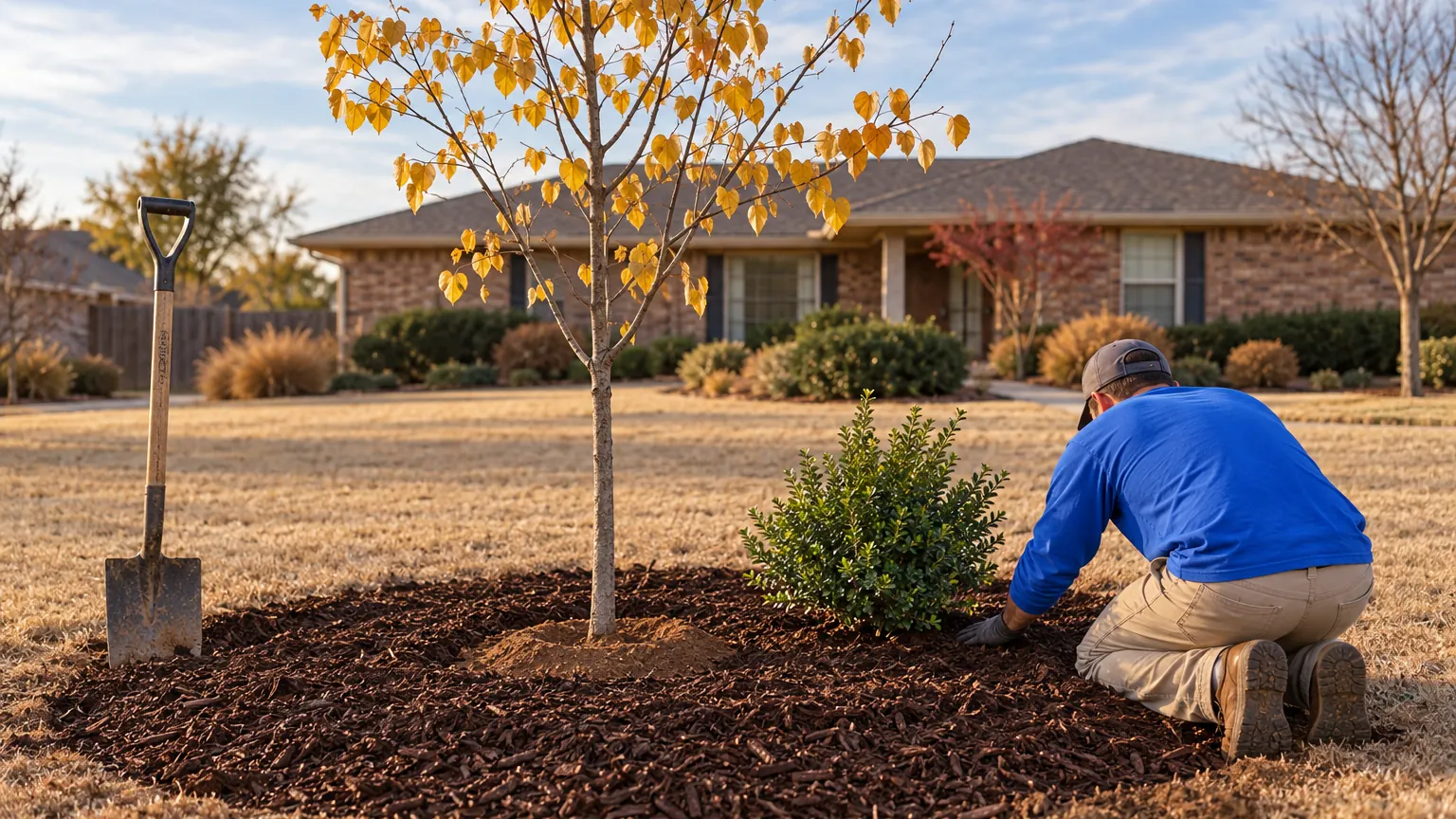
Add two to three inches of mulch over the root zone and pull it back a few inches from the trunk or stems. Mulch piled against the bark holds moisture and invites rot and pests. It should look like a donut, not a volcano. Hold off on fertilizer at planting unless a soil test or the plant’s needs call for it. Too much, or poorly timed, fertilizer can push growth the plant is not ready to support or stress young roots, so otherwise wait until spring growth begins.
When does it make sense to hire a pro for fall planting?
A single shrub is an easy weekend project. A tree you want to last 50 years, or a full bed with several plants, is where mistakes get expensive. It makes sense to bring in help when you have drainage problems, a large tree to handle, a new bed to lay out, or a lot of plants to get in before the freeze.
We offer Fall Landscape Planting for homeowners who want help with this. We also handle drainage solutions, which matters because planting in clay that holds water can undo even a good plant choice. If you are not sure what belongs in your yard, or whether your site is ready, you can reach out through our contact page and we can talk it through.
Frequently asked questions
Is November too late to plant trees in Oklahoma?
Not usually. Early to mid November is still a workable window, and container-grown trees can go in later as long as the ground is not frozen. Later plantings need extra attention to deep watering and mulch through winter.
Do newly planted shrubs need watering in winter?
Yes, during dry spells. Oklahoma winters are often dry and windy, and new roots are still limited. Check the soil every week or two, and when the root zone is dry, water slowly and deeply on a day above freezing, especially for evergreens.
What size tree should I buy for fall planting?
Smaller trees, such as 15-gallon container trees or those around 1.5 to 2 inches in trunk diameter, usually establish faster than very large ones. They put out roots sooner and often catch up to bigger, more stressed trees within a few years.
How deep should I mulch around new trees?
Two to three inches is enough. Spread it across the root zone, but keep it a few inches away from the trunk so moisture does not sit against the bark.
Should I fertilize at planting time?
Usually not. Healthy new plants rarely need it at planting, and too much or poorly timed fertilizer can encourage growth that winter damages or stress young roots. A soil test is the best guide, and otherwise it is safest to wait until spring growth starts.