
Every spring, homeowners across the Norman and Oklahoma City metro deal with cracked concrete, uneven flagstone, or patios that failed after another brutal winter. The frustration is real, and it’s usually preventable. Understanding how to choose the right patio material for Oklahoma weather isn’t just about aesthetics. It’s about making a decision that holds up against our unique climate challenges while giving your family years of comfortable outdoor living.
Oklahoma throws everything at your hardscape. We experience dramatic freeze-thaw cycles throughout winter, scorching 100-degree summers, torrential spring rains, occasional ice storms, and the constant movement of our red clay soil. Your patio material needs to handle all of it without demanding constant repairs or becoming too hot to walk on barefoot. Let’s walk through what actually works in our region and why.
Why Oklahoma Weather Makes Material Selection Critical
If you’ve lived here for more than a year, you already know our climate doesn’t play favorites. What makes our weather particularly challenging for hardscapes is the combination of factors working against your patio simultaneously.
Our red clay soil expands dramatically when wet and contracts when dry. This constant movement puts stress on any material sitting on top of it. Add in winter freezing where water trapped beneath your patio expands, and you’ve got the perfect recipe for cracks and shifting. Summer brings its own problems. Some materials absorb and retain so much heat they’re unusable during the hottest months when you’d actually want to be outside.
We’ve seen beautiful patios fail within two years because homeowners picked materials based on looks alone, without considering how that specific product performs in Oklahoma conditions. The best patio material for Oklahoma balances durability against our weather patterns, provides comfortable surface temperatures, and requires realistic maintenance for your lifestyle. If you’re looking for low-maintenance landscaping solutions, choosing the right patio material from the start saves you headaches down the road.
Comparing Your Main Patio Material Options
Let’s get specific about the two primary options you’ll encounter and how each performs in our climate. These materials show up in projects across central Oklahoma, and there are clear patterns in which ones deliver long-term satisfaction versus which create ongoing headaches.
Flagstone Patios
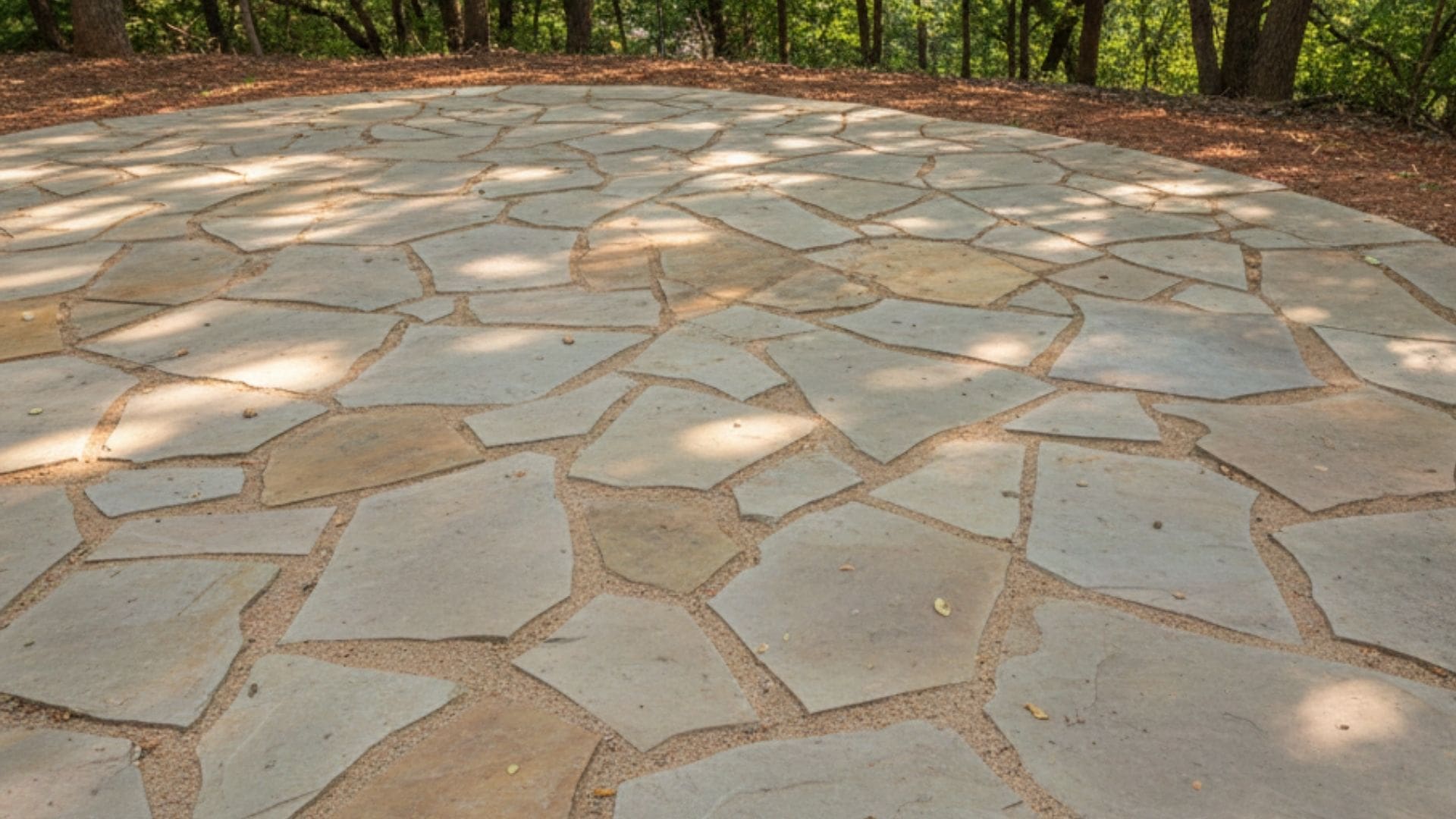
Flagstone remains incredibly popular in Oklahoma for good reason. This natural stone option offers excellent heat dissipation. Even on 95-degree days, flagstone stays relatively cool underfoot compared to concrete or darker materials. The irregular shapes create visual interest, and the material itself is extremely durable when properly installed.
The catch is installation quality matters enormously with flagstone. Proper base preparation and joint filling are non-negotiable in our climate. When done right, flagstone handles freeze-thaw cycles beautifully because the joints allow for slight movement without cracking. Most installations in Oklahoma use a minimum 1-inch thickness.
Pros of flagstone:
- Stays cooler in summer heat
- Naturally slip-resistant when textured
- Handles freeze-thaw cycles well with proper installation
- Unique aesthetic that complements Oklahoma landscapes
- Lasts 50+ years with minimal maintenance
- Works beautifully with other hardscape features like fire pits and walkways
Cons of flagstone:
- Higher upfront investment
- Requires professional installation for longevity
- Joints need occasional maintenance
- Surface can be uneven if not carefully laid
Flagstone walkways often connect to patio spaces, creating cohesive outdoor living areas. The same durability that makes flagstone excellent for patios makes it ideal for high-traffic pathways and sitting areas around fire pits.
Concrete Additions
Poured concrete offers the most budget-friendly option upfront, and modern techniques have made it more attractive than the plain gray slabs of decades past. Concrete additions work well for homeowners prioritizing immediate affordability and accessibility.
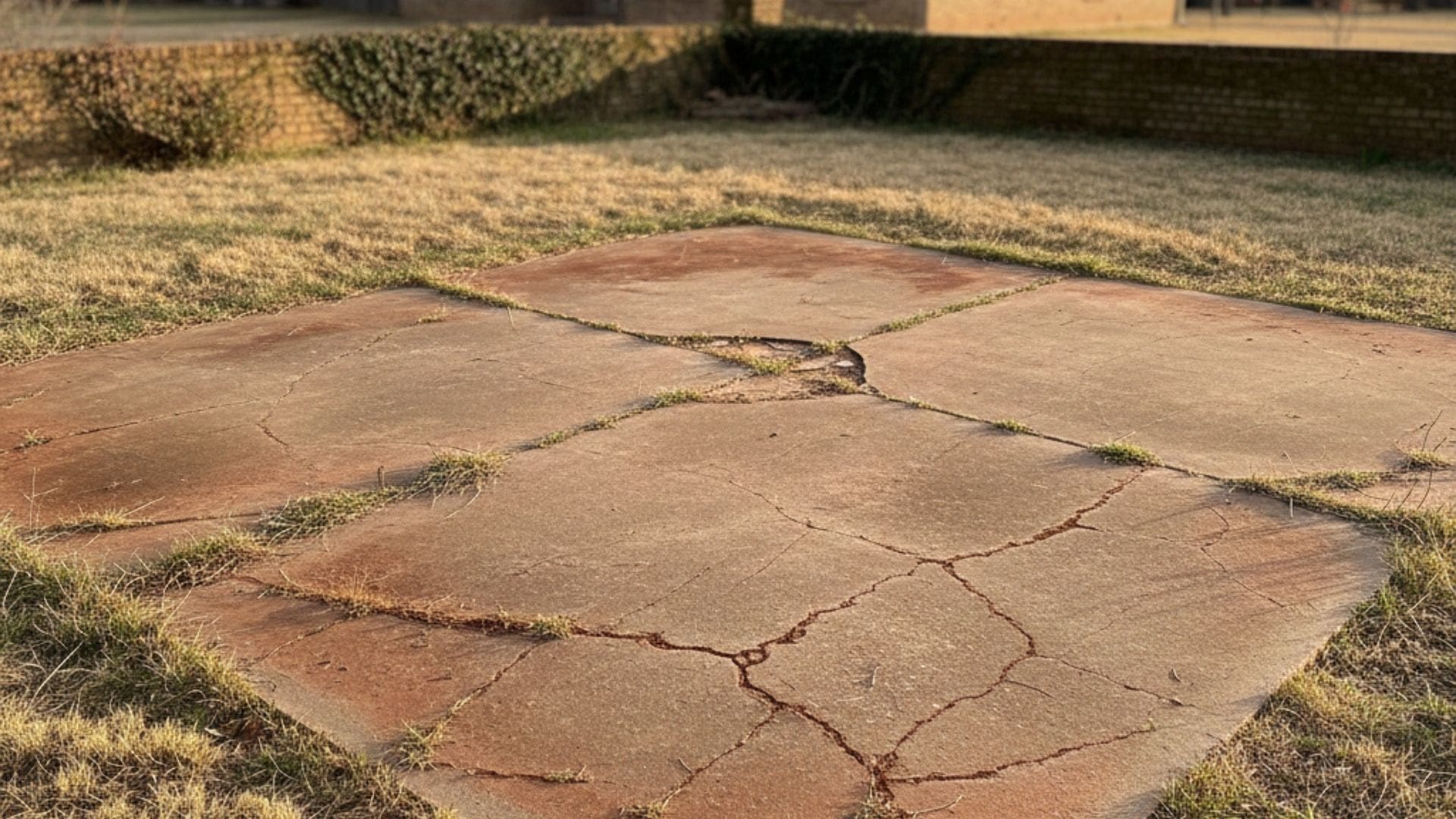
However, concrete presents specific challenges in Oklahoma. Our expansive clay soil causes concrete to crack more readily than in other regions. You’ll often see control joints, those intentional lines used to manage where cracking occurs. Summer heat is another issue. Concrete absorbs and holds heat intensely, making barefoot walking uncomfortable for hours after sunset.
Quality installation with proper reinforcement, adequate thickness (minimum 4 inches), and appropriate expansion joints helps, but concrete fundamentally doesn’t flex with soil movement the way natural stone can.
Pros of concrete:
- Lowest initial cost
- Smooth, continuous surface
- Accessible for wheelchairs and mobility devices
- Quick installation timeline
- Can integrate with other hardscape elements
Cons of concrete:
- Cracks are likely in Oklahoma clay soil
- Retains heat excessively in summer
- Difficult and expensive to repair once damaged
- Stains from Oklahoma’s red clay can be permanent
- Typically requires replacement after 20-30 years
What to Consider Beyond Material Type
A patio material comparison shouldn’t stop at the surface product. Several other factors dramatically impact long-term success, and they’re particularly important for weatherproof patio design in our climate.
Drainage planning: This is absolutely essential in Oklahoma. Our spring thunderstorms can drop inches of rain in hours. Your patio needs proper slope, typically 1-2% grade away from your home, and in many cases additional drainage solutions. Standing water becomes a persistent problem when installations ignore Oklahoma’s rainfall patterns. Dry creek beds can provide both functional drainage and attractive landscape features.
Base preparation: This determines if your patio lasts five years or fifty. In Oklahoma’s red clay, this typically means excavating the clay, installing a properly compacted aggregate base (usually 4-6 inches minimum), and sometimes incorporating geotextile fabric to prevent base mixing with clay. Skipping or skimping on base prep is the single biggest mistake that leads to failed patios.
Edge containment: This prevents natural stone from creeping outward over time. Our clay soil’s movement makes solid edging even more critical than in other regions. Decorative borders serve both functional and aesthetic purposes in many installations.
The orientation and size of your patio also matter. Larger surfaces increase the likelihood of differential settling in our soil. Sometimes breaking a large patio into connected zones with flagstone walkways performs better long-term than one massive slab.
How Climate Affects Your Long-Term Investment
Understanding how to choose the right patio material for Oklahoma weather means thinking beyond installation day. Our climate creates specific wear patterns you need to anticipate.
Freeze-thaw damage: This happens when water seeps into tiny cracks or porous materials, freezes, expands, and causes cracking. Oklahoma typically experiences 30-40 freeze-thaw cycles per winter. Materials that can flex or have properly designed joints handle this better than rigid surfaces.
Heat retention: This becomes a serious issue from May through September. Darker materials and dense surfaces like concrete can reach 140-150 degrees on summer afternoons. This doesn’t just make your patio unusable, it can radiate heat toward your home and increase cooling costs. Lighter-colored flagstone remains significantly cooler.
Storm damage: Our severe weather should factor into your decision. Hail, high winds with debris, and flash flooding all test your hardscape. Natural stone withstands these events better than most alternatives.
Soil movement: Movement from our clay soil occurs year-round but accelerates during wet periods. Materials with some flexibility, proper drainage, and quality base preparation survive this movement. Rigid materials crack.
Maintenance Requirements You Should Know
Be realistic about maintenance before committing to a material. Every option requires some care, but the time and cost investment varies significantly.
Flagstone needs occasional joint maintenance. Typically every 3-5 years, you’ll want to check that polymeric sand or mortar joints remain intact. Power washing once or twice annually keeps it looking fresh. That’s about it for maintenance.
Concrete demands the most attention to maintain appearance. Sealing every 2-3 years protects against stains and weather damage. Cracks require prompt repair to prevent water infiltration and worsening damage through freeze-thaw cycles. Oklahoma’s red clay stains concrete easily, especially during wet periods.
For families with kids or pets, both materials work but texture matters. Rougher flagstone or textured concrete provides better traction for running children and playing dogs. Smooth concrete can become slippery when wet.
Making Your Final Decision
The right choice usually becomes clear once you honestly assess your priorities, budget, and timeline.
If you’re investing for the long haul and want minimal maintenance with excellent heat management, flagstone typically delivers the best value over its lifetime despite higher upfront costs. Homeowners planning to stay in their homes for many years often find this investment worthwhile.
Budget-conscious homeowners with immediate needs often choose concrete additions, accepting that eventual replacement is likely. Some view this as getting outdoor living space now rather than waiting years to save for flagstone.
One practical advantage of planning patio upgrades during winter is getting on the schedule for early spring installation. Projects typically run smoother when we’re not competing with Oklahoma’s spring storm delays or summer heat. Early planning also allows time to coordinate with other outdoor projects like landscape lighting, fire pits, or pergolas that complete your outdoor living space.
Getting Professional Guidance for Your Project
Every property presents unique drainage patterns, soil conditions, and usage requirements. What works beautifully at your neighbor’s house might not be the right solution for your yard. Professional assessment considers factors most homeowners don’t even know to evaluate.
As a local landscaping company in the area, we walk properties, discuss how you’ll actually use the space, show material samples, and provide honest recommendations based on your specific situation and Oklahoma’s climate realities. We can also help you plan how your patio integrates with other landscape design elements, from retaining walls to decorative borders to complete outdoor living areas.
Your outdoor space should serve your family for decades without constant worry about repairs or safety issues. Taking time now to understand how to choose the right patio material for Oklahoma weather means you’ll be enjoying comfortable, beautiful outdoor living long after installation day. Give us a call at 405-993-5253, and let’s start planning the patio that’s right for your home and lifestyle.
Frequently Asked Questions
What is the best patio material for Oklahoma weather?
Flagstone is often the best choice for Oklahoma’s climate because it stays cooler in summer heat, handles freeze and thaw cycles well with proper installation, and flexes with red clay soil movement. Concrete patios can be more affordable but are more likely to crack and hold heat. The right option depends on your budget, maintenance preferences, and long term plans. A professional landscape designer can help you choose what works best for your property.
How does Oklahoma’s red clay soil affect patio installation?
Oklahoma’s red clay soil expands when wet and shrinks when dry, which creates constant movement under patios. This movement can crack concrete and shift stone if the base is not installed correctly. A quality installation includes removing the clay, installing a properly compacted aggregate base that is at least 4 to 6 inches deep, and sometimes using geotextile fabric. Good drainage is also critical to prevent water from collecting under the patio.
What patio material stays coolest in Oklahoma summers?
Flagstone stays much cooler than concrete during Oklahoma summers. Concrete and darker materials can reach 140 to 150 degrees on hot afternoons, while lighter colored flagstone stays more comfortable even on 95 degree days. This keeps the patio usable throughout the day and reduces heat radiating toward your home.
How long do flagstone patios last in Oklahoma?
A properly installed flagstone patio can last 50 years or more in Oklahoma with minimal maintenance. Longevity depends on solid base preparation, using stone that is at least 1 inch thick, and proper joint filling. Maintenance usually includes joint touch ups every 3 to 5 years and occasional power washing.