
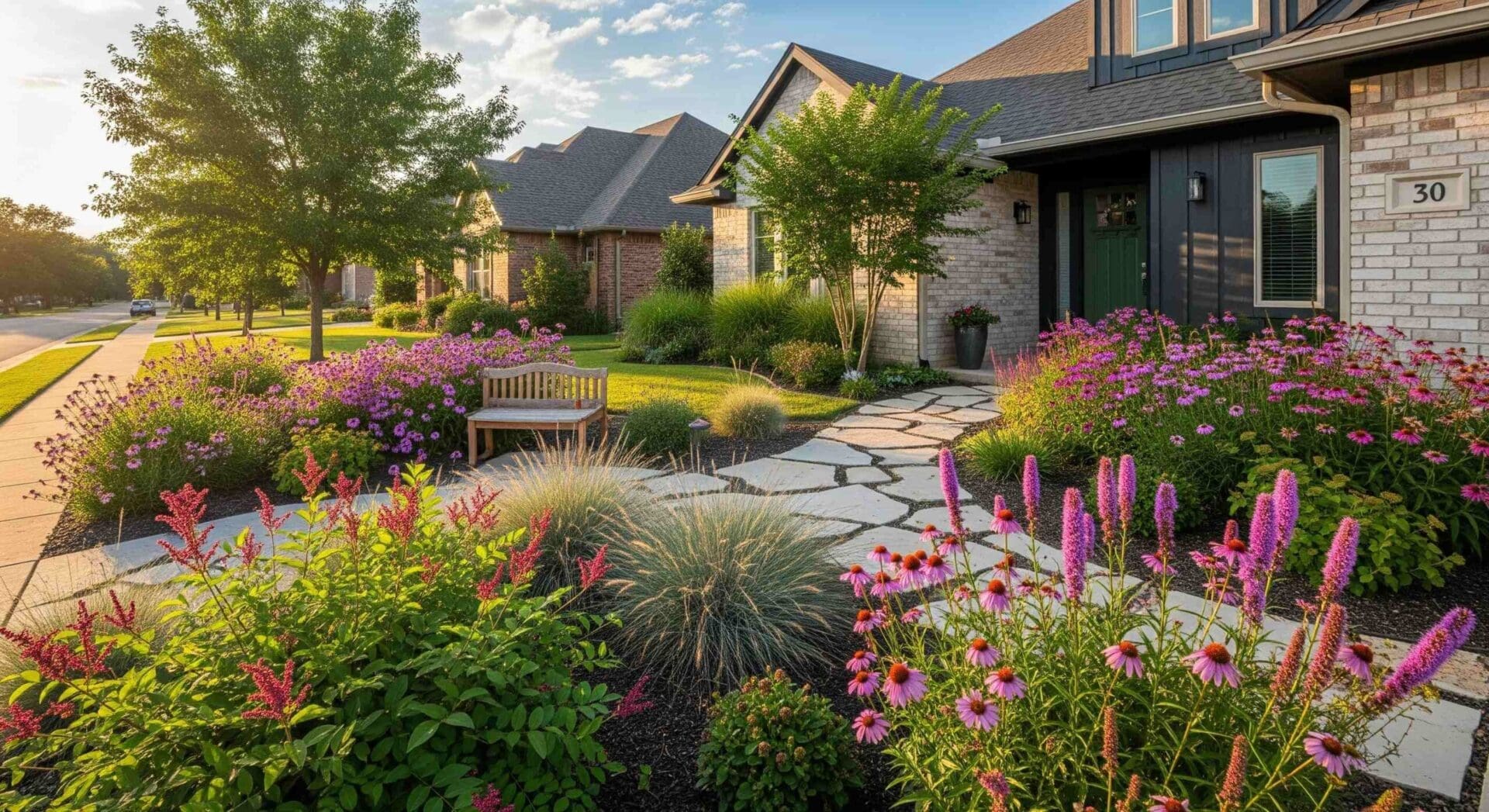
Moving into your first home in central Oklahoma opens up exciting opportunities to create the outdoor space you've always envisioned. However, if you've experienced even one summer here, you understand that traditional landscaping advice doesn't always work in our unique climate. Between intense heat waves, unpredictable rainfall, and that famous red clay soil, many gorgeous plants simply won't survive without constant care and expensive irrigation systems.
The key to creating a beautiful, low-maintenance yard lies in choosing drought tolerant plants for landscaping that actually thrive in our conditions. These aren't compromise plants or boring alternatives. They're stunning varieties that flourish in Oklahoma's challenging environment while requiring far less water, time, and money than conventional landscapes.
When you select plants adapted to central Oklahoma's climate, you're doing more than just surviving summer heat. You're creating an outdoor space that becomes more beautiful each year while freeing up your weekends to actually enjoy it. Whether you want to boost your Norman property's curb appeal or design an inviting backyard retreat in Moore, smart plant choices transform your outdoor investment from a source of stress into genuine pride.
Why Drought-Tolerant Plants Are Game Changers for Oklahoma Landscapes
Gardening successfully in central Oklahoma means working with nature rather than fighting against it. Summer temperatures regularly climb above 95°F, and drought periods can stretch for weeks. Traditional high-water plants like impatiens or hydrangeas might look tempting at garden centers, but they'll struggle without constant irrigation, which becomes both costly and unsustainable for most homeowners.
Key Benefits of Drought-Tolerant Plants:
- Dramatically Lower Water Bills - Reduce irrigation costs by up to 60% compared to traditional landscaping
- Minimal Fertilizer Requirements - These plants thrive in Oklahoma's natural soil conditions
- Superior Pest Resistance - Native varieties naturally resist common regional pests
- Extended Bloom Periods - Many species flower continuously through summer heat
- More Weekend Freedom - Spend time enjoying your yard instead of constantly maintaining it
- Enhanced Wildlife Support - Native plants provide essential food and habitat for local butterflies and birds
The beauty of drought-tolerant landscaping extends beyond practical benefits. These resilient plants often showcase striking textures, colors, and forms that create sophisticated outdoor spaces perfectly suited to Oklahoma's natural aesthetic. When properly planned through professional landscape design services, these plants work together to create cohesive, stunning results that improve with each passing season.
Oklahoma's Best Drought-Tolerant Trees for Every Space
Large Shade Trees That Deliver
| Tree Species | Mature Height | Special Features | Best For |
|---|---|---|---|
| Texas Red Oak | 40-60 feet | Stunning fall color, clay soil tolerance | Large yards, property lines |
| Bur Oak | 50-80 feet | Extremely long-lived, storm resistant | Legacy plantings, open areas |
Texas Red Oak stands out as an exceptional choice for homeowners wanting substantial shade coverage. This tree grows at a reasonable pace and establishes deep root systems that make it incredibly drought-resistant once mature.
Texas Red Oak stands out as an exceptional choice for homeowners wanting substantial shade coverage. This native species develops spectacular fall colors, grows at a reasonable pace, and establishes deep root systems that make it incredibly drought-resistant once mature. It adapts particularly well to the clay soils common throughout Moore and Edmond areas.
Bur Oak represents a true long-term investment for your property. Known for its distinctive, deeply-lobed leaves and impressive longevity, this tree handles both drought conditions and severe weather with ease.
Ornamental Trees for Smaller Spaces
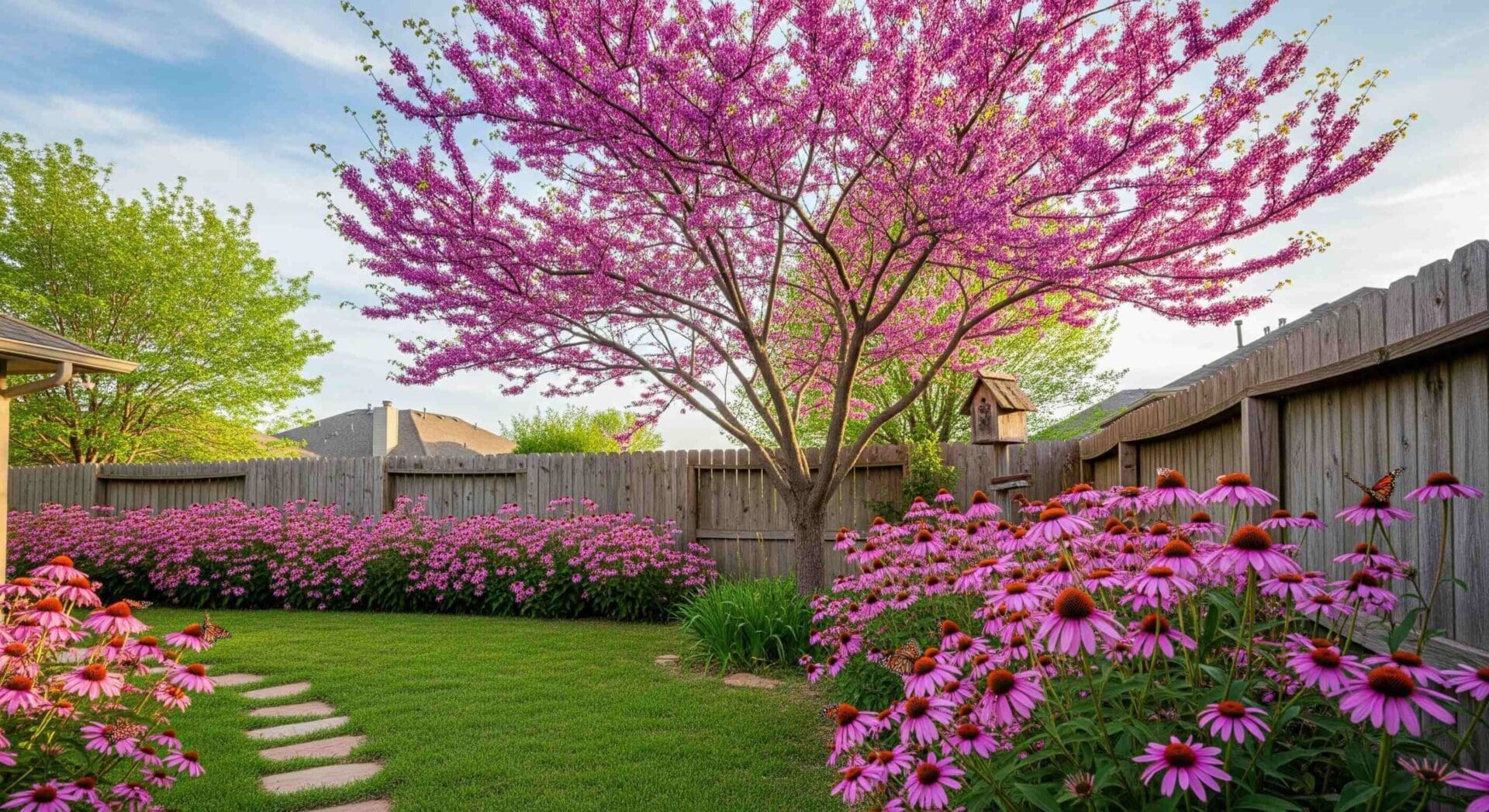
Eastern Redbud
- Height: 20-30 feet
- Spring blooms: Pink and purple flowers appear before leaves emerge
- Fall interest: Heart-shaped yellow leaves create seasonal beauty
- Light needs: Partial shade to full sun
Mexican Buckeye
- Height: 8-12 feet
- Spring blooms: Fragrant pink flower clusters
- Perfect for: Small spaces and intimate courtyards
Stunning Shrubs and Perennials That Thrive in Oklahoma Heat
Foundation Plantings for Year-Round Structure
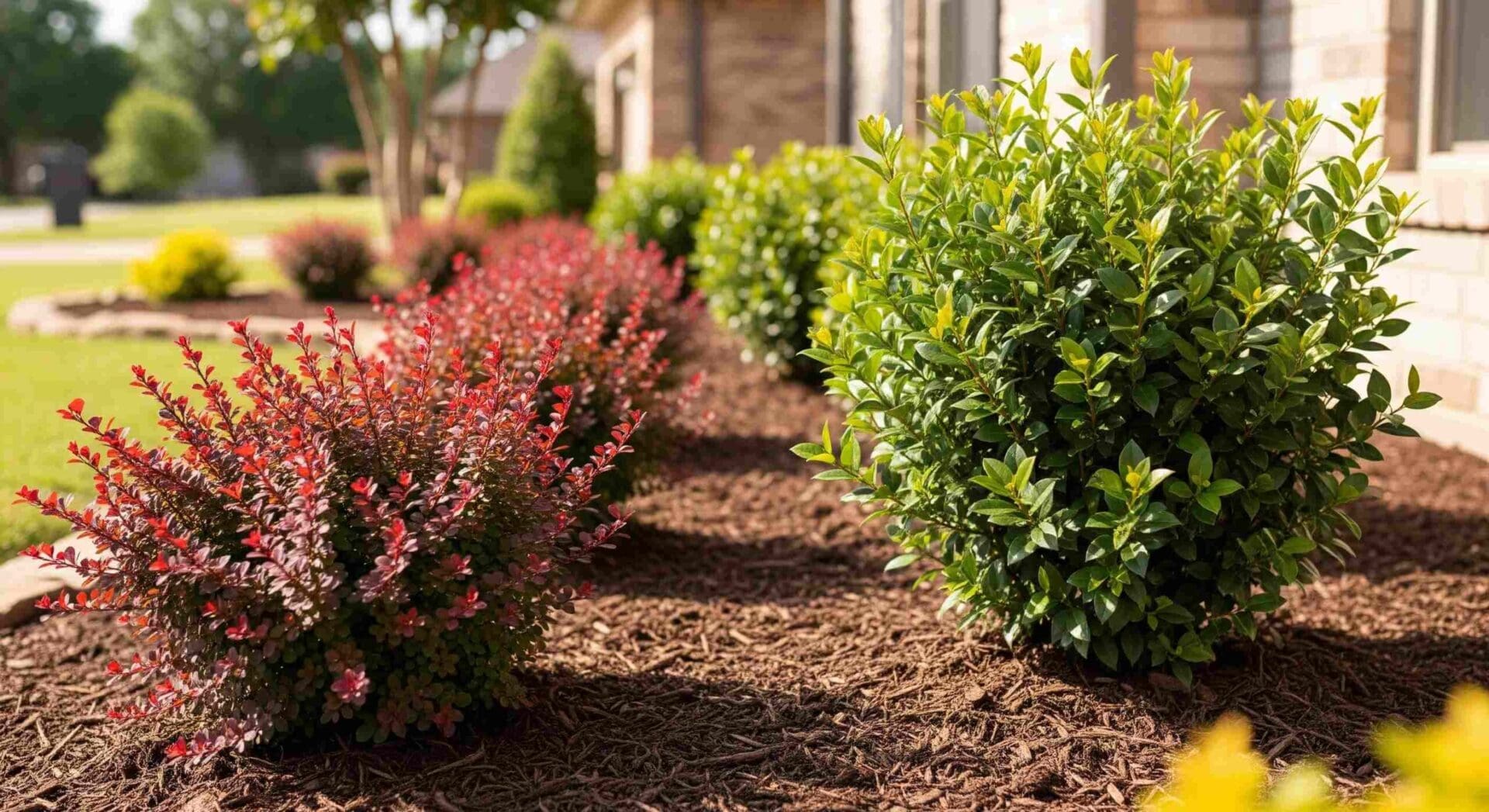
BARBERRY - Maintenance Level: Extremely Low
- Colors available: Deep red to bright yellow-green
- Special benefit: Natural security barrier with thorns
- Water needs: Almost none after first year
YAUPON HOLLY - Maintenance Level: Low
- Type: Evergreen foundation plant
- Bonus feature: Red berries attract birds (female plants)
- Best use: Corner plantings, privacy screens
Colorful Accent Plants for Maximum Impact
- LANTANA - The Butterfly Magnet
- Bloom period: Spring through fall
- Heat tolerance: Thrives in temperatures over 100°F
- Maintenance: Occasional deadheading for continuous blooms
- PRAIRIE PHLOX - The Native Beauty
- Bloom time: Early spring spectacular display
- Growth pattern: Naturalizes and self-spreads
- Design style: Works beautifully in formal and wildflower gardens
- PURPLE CONEFLOWER (ECHINACEA) - The Multi-Purpose Star
- Dual purpose: Ornamental beauty plus medicinal properties
- Wildlife benefits: Butterflies love blooms, birds eat seeds
- Winter interest: Attractive seed heads persist through cold months
Installation and Establishment for Long-Term Success
Perfect Timing for Oklahoma Planting
BEST MONTHS FOR SUCCESS:
- September through November (OPTIMAL) - Cooler temperatures, fall rains help establishment
- March through April (GOOD) - Adequate time for root development before summer
Soil Preparation That Actually Works
For Clay Soil (Most Common):
- Don't Over-Amend - Clay soil actually holds nutrients well
- Add Coarse Compost - Improves drainage without creating problems
- Avoid Fine Sand - Creates concrete-like conditions when mixed with clay
Quick Clay Test: Squeeze moist soil in your hand. If it holds together in a ball, you have clay soil.
The First-Year Watering Formula
| Plant Type | Week 1-2 | Month 1-3 | Month 4-12 | Year 2+ |
|---|---|---|---|---|
| Trees | Daily | 2x per week | Weekly (if no rain) | Natural rainfall |
| Shrubs | Daily | 2x per week | Bi-weekly | Natural rainfall |
| Perennials | Daily | 1-2x per week | Monthly | Natural rainfall |
Golden Rule: Deep watering less frequently beats shallow watering daily
Common Mistakes That Cost Time and Money
The Top 3 Costly Errors
MISTAKE #1: Overwatering During Establishment
- The Problem: Worrying about new plants and compensating with too much water
- The Solution: Water deeply but less frequently to encourage deep root growth
MISTAKE #2: Mixing Incompatible Plant Groups
- The Problem: Planting drought-tolerant species next to high-water plants
- The Solution: Design separate zones for different water requirements
MISTAKE #3: Ignoring Mature Plant Sizes
- The Problem: Planting too close together based on nursery pot sizes
- The Solution: Research mature sizes and plan accordingly
Professional vs. DIY: Making the Right Choice
DIY vs. Professional: The Complete Comparison
| Aspect | DIY Approach | Professional Installation |
|---|---|---|
| Timeline | Weeks to months | 3-7 days typically |
| Plant Survival Rate | 60-70% first year | 90%+ with warranty |
| Design Cohesion | Hit or miss | Professionally planned |
| Long-term Value | Variable results | Guaranteed establishment |
When Professional Help Makes Sense
Choose Professional Installation If:
- Your project involves grading or drainage issues
- You need design help creating a cohesive look
- Time is limited (busy professionals)
- You want warranty protection on plants and work
For comprehensive information about available landscaping services, homeowners can explore options ranging from complete design installations to specialized maintenance programs.
DIY Makes Sense If:
- Simple plant additions to existing beds
- Learning and gardening is your hobby
- Budget requires phased approach over time
Simple Maintenance for Beautiful Results
SPRING - Remove winter damage, apply light compost layer
SUMMER - Monitor during extreme heat, deep water only during severe drought
FALL - Leave seed heads, plant new additions, reduce watering
WINTER - Cut back grasses in late winter, plan next year's additions
For homeowners who prefer to focus on enjoying their outdoor spaces rather than maintaining them, professional flower bed maintenance services can handle these seasonal tasks while ensuring your drought-tolerant plants receive proper care.
Pruning Simplified
LIGHT PRUNING ONLY: Barberry and Yaupon Holly in early spring if shaping needed
DEADHEADING FOR MORE BLOOMS: Lantana, Blanket Flower, Purple Coneflower
NEVER PRUNE: Ornamental grasses until late winter, newly planted trees
Creating Your Outdoor Success Story
Transforming your property with carefully selected drought tolerant plants for landscaping represents both an immediate lifestyle upgrade and a smart long-term investment in your home's value. These resilient plants mature into increasingly attractive landscapes while demanding less time, water, and money than traditional plantings.
For homeowners ready to move beyond trial and error toward landscapes that truly work with Oklahoma's climate, partnering with experienced local professionals ensures your investment delivers lasting results. Scissortail Landscaping specializes in helping central Oklahoma homeowners navigate plant selection, design decisions, and installation processes that create stunning, sustainable outdoor spaces.
Your dream landscape, one that survives and thrives through Oklahoma's weather extremes, is more achievable than you might think. Contact Scissortail Landscaping at 405-993-5253 or visit scissortailokc.com to discuss your vision and discover which drought-tolerant plants will flourish in your specific outdoor space.