
Spring arrives in central Oklahoma with a mix of promise and urgency. As the last frost fades and your neighbors begin their weekend yard projects, you might find yourself staring at that problematic slope in your backyard, the one where water pools after every thunderstorm or where your carefully planted flowers keep washing away. New homeowners across Norman, Moore, and surrounding communities often discover that what seemed like a minor grade issue during the house hunt becomes a genuine landscaping challenge once they're living with it daily.
The solution might be simpler than you think, and the timing couldn't be better. Retaining wall installation offers both immediate functional benefits and long-term aesthetic appeal, making it one of the smartest investments you can make in your property this season. With Oklahoma's unpredictable spring weather patterns and the growing season just beginning, addressing drainage and erosion issues now sets the foundation for years of beautiful, worry-free outdoor living.
Why Retaining Walls Are Game-Changers for Oklahoma Properties
Central Oklahoma's unique geography presents specific challenges that retaining walls address beautifully. Our region's clay-heavy soils expand and contract dramatically with moisture changes, while sudden spring storms can dump inches of rain in short periods. These conditions create the perfect storm for erosion, foundation concerns, and landscape washout.
Retaining walls solve multiple problems simultaneously: preventing soil loss during heavy rains, directing water flow away from foundations, transforming steep slopes into functional outdoor areas, adding visual appeal that buyers notice, and eliminating constant replanting cycles caused by erosion.
Local soil conditions make professional installation particularly important. Oklahoma's expansive clay requires specific drainage considerations and proper base preparation that amateur installations often miss. When done correctly, a retaining wall becomes a permanent solution rather than a temporary fix.
Perfect Timing for Spring Installation
Scheduling your retaining wall installation during Oklahoma's spring season offers several strategic advantages. March through May provides ideal weather windows between winter freeze-thaw cycles and summer's intense heat, creating optimal conditions for both construction and immediate landscaping integration.
Spring timing benefits include moderate temperatures for better working conditions, soil that's workable but not saturated, immediate planting opportunities for instant curb appeal, contractor availability before the summer rush, and seasonal preparation before heavy storm season intensifies.
Many homeowners throughout our Norman service area schedule consultations in February and March, allowing for April and May installations that integrate seamlessly with spring planting schedules.
Understanding Materials That Work Best
The retaining wall materials you choose significantly impact both functionality and aesthetics in our regional climate. Oklahoma's weather extremes, from ice storms to 100-degree summers, demand materials that handle expansion, contraction, and moisture fluctuations gracefully.
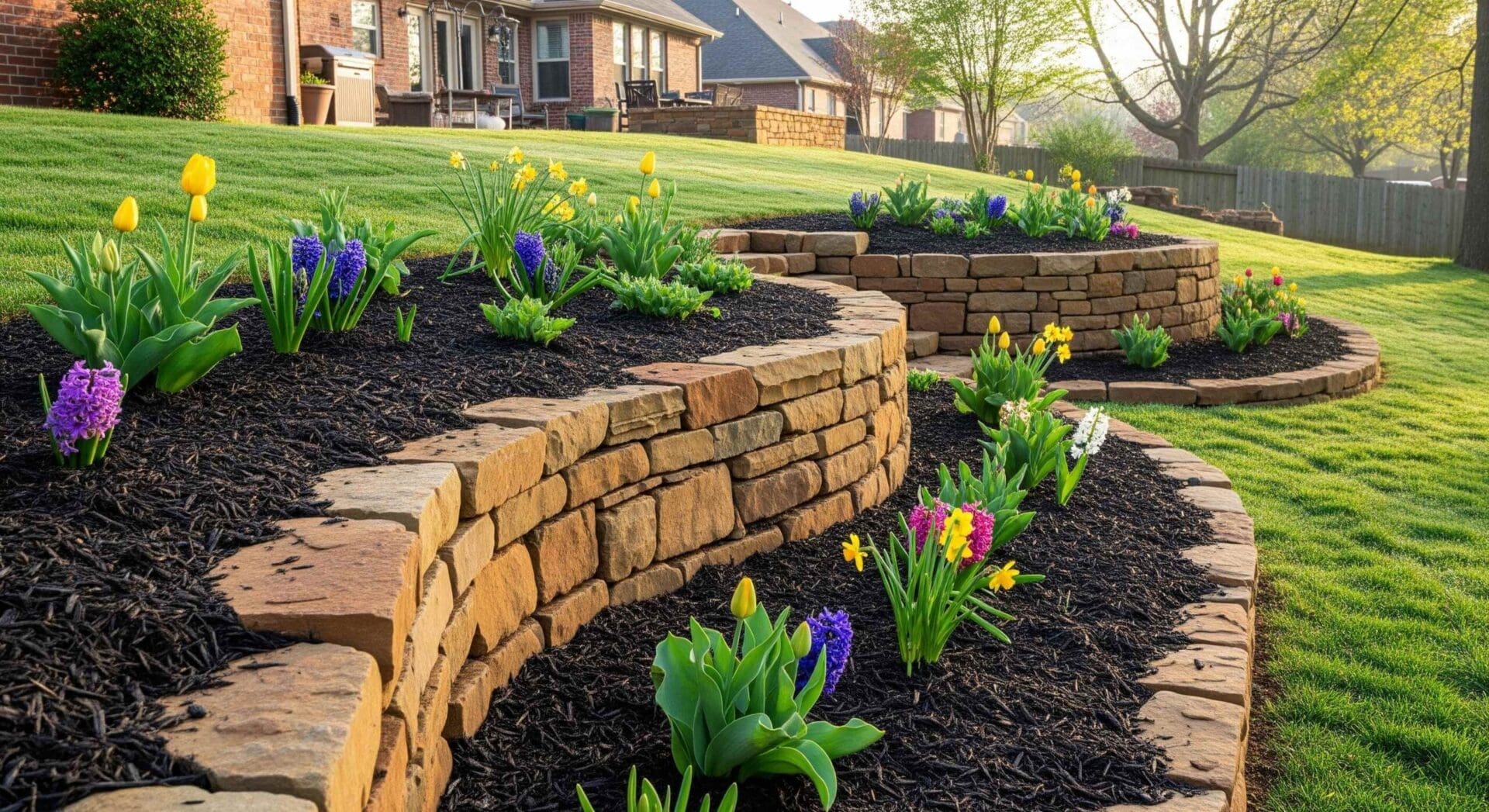
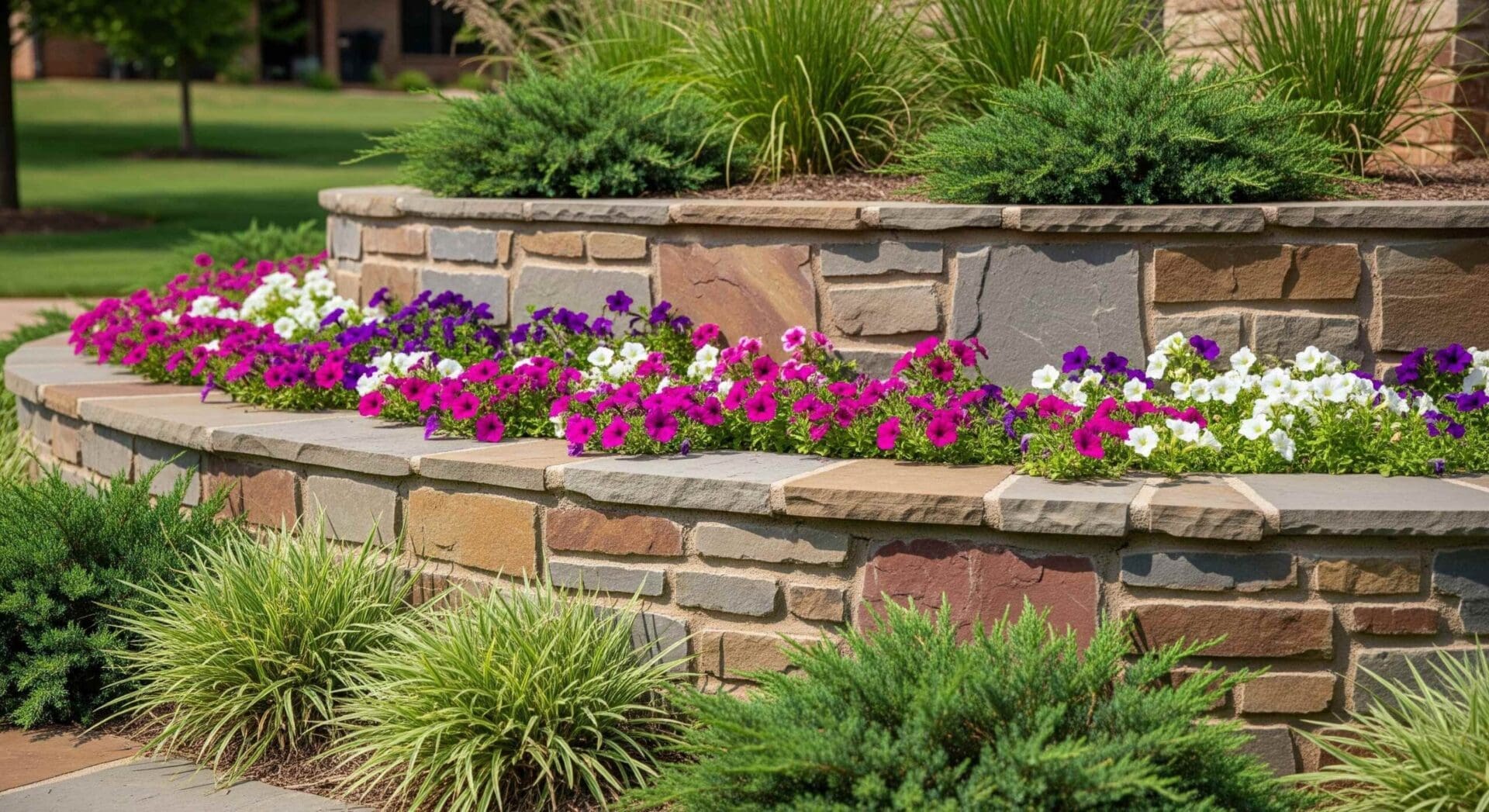
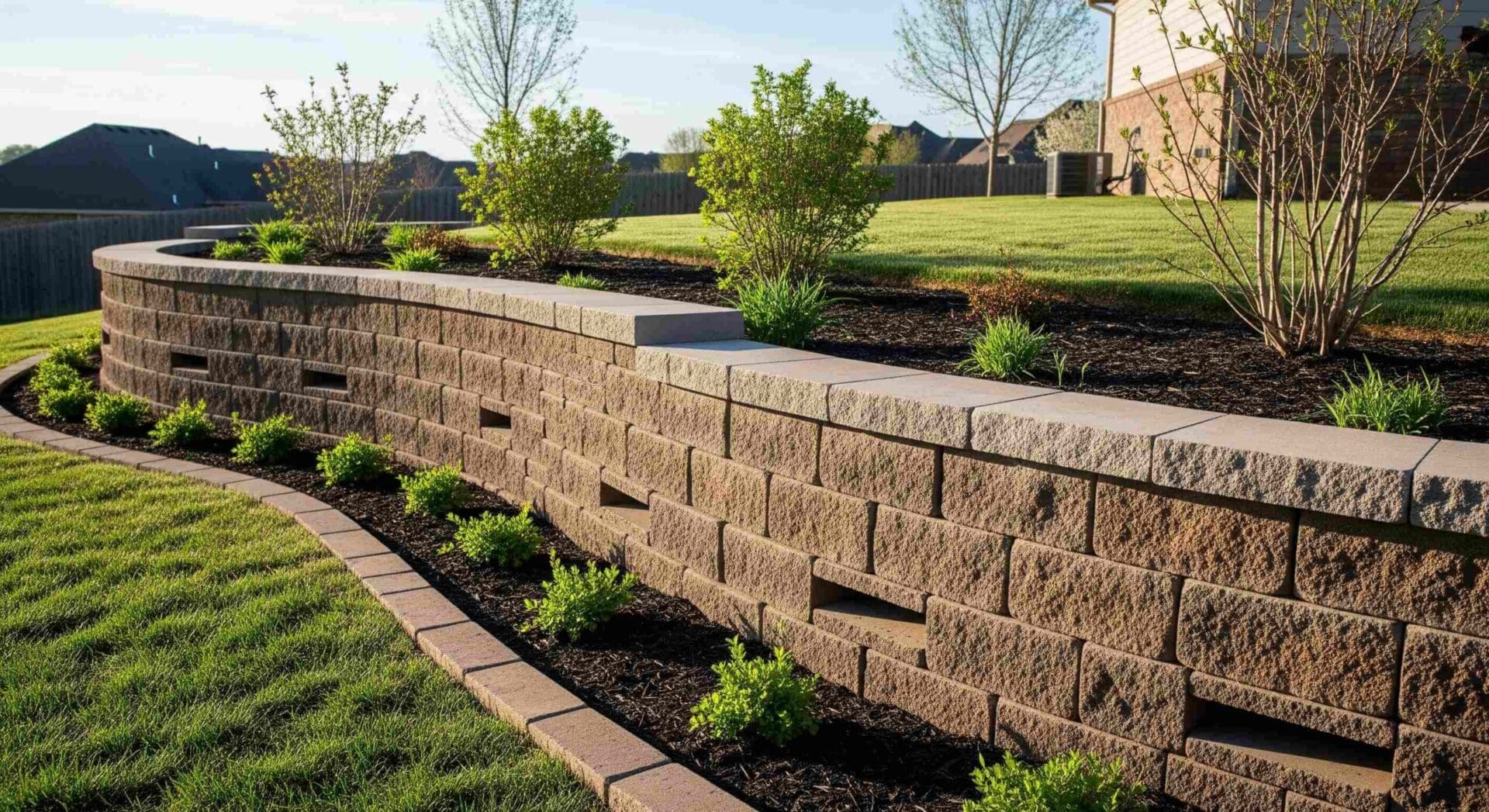
Flagstone and natural stone remain popular choices throughout the region. These materials weather beautifully and complement the earthy tones common in regional architecture. Natural stone retaining walls develop character over time and integrate seamlessly with existing landscape features, offering exceptional durability in freeze-thaw cycles, unique appearance, excellent drainage properties, and significant property value increases.
Modern segmental retaining wall systems offer consistency and strength while maintaining natural aesthetics. These engineered solutions work particularly well for taller walls or complex drainage situations common in areas with significant grade changes.
Planning Your Project Successfully
Successful retaining wall installation begins with understanding your specific site conditions and long-term landscape goals. Professional landscape design and installation services evaluate factors invisible to most homeowners but critical to long-term success.
Critical evaluation points include:
- Soil type and clay content affecting drainage requirements
- Natural water flow patterns to prevent future problems
- Property lines and utilities for compliance and safety
- Integration with existing plantings and hardscape features
- Future expansion possibilities for modifications
Oklahoma building codes limit DIY installations to walls under certain heights. Most residential installations range from 18 inches to 4 feet in height, with taller walls requiring specialized design and engineering. Understanding these limitations helps homeowners make informed decisions about professional versus DIY approaches.
Professional Installation Process
Understanding the installation process helps homeowners set realistic expectations and appreciate the value of professional expertise. Quality retaining wall installation involves multiple phases, each critical to long-term performance.
Proper excavation extends well beyond the visible wall footprint. Professional installers excavate to depths that account for frost lines and soil conditions, creating foundations that remain stable through Oklahoma's variable weather patterns. Foundation requirements include precise grading for drainage, selecting aggregate that compacts well, meeting engineering specifications for stability, and installing drainage systems that prevent water buildup.
Quality installation integrates drainage solutions during construction rather than as an afterthought. Professional crews install geotextile fabrics, drainage pipes, and backfill materials in precise sequences that ensure long-term stability. The visible portion represents only about 60% of the actual construction work involved.
Design Integration and Plant Selection
Retaining walls offer opportunities for creative landscape integration that extend far beyond basic erosion control. Thoughtful design transforms functional necessities into landscape features that define outdoor spaces and create natural gathering areas.
Multi-level retaining walls create terraced planting areas that showcase seasonal flowers and provide excellent drainage for plant health. The improved drainage conditions make them ideal locations for implementing sustainable landscaping techniques that support drought-tolerant plants and reduce long-term maintenance.
Excellent plant choices for central Oklahoma retaining walls:
- Drought-tolerant perennials like salvia and ornamental grasses
- Seasonal color with pansies for cool seasons, petunias for summer heat
- Evergreen structure from juniper and holly varieties
- Cascading plants that soften wall edges naturally
Professional flower bed maintenance services can help establish and maintain these plantings for optimal results throughout the growing season.
Modern retaining wall designs often incorporate lighting elements and seating areas that extend outdoor living into evening hours. Cap stones can accommodate LED lighting strips, while wider walls provide informal seating for gatherings. These integrated features distinguish custom installations from basic utility walls.
Investment Considerations and Avoiding Mistakes
Retaining wall installation represents a significant home improvement investment that typically provides excellent returns through increased property value, reduced maintenance costs, and enhanced outdoor living opportunities.
Material costs vary significantly, with natural stone commanding premium pricing while offering maximum durability and visual impact. Site complexity influences installation requirements, with challenging access or extensive excavation increasing project scope. Spring installations often provide better value than peak summer scheduling when contractor demand peaks.
Inadequate drainage planning causes more retaining wall failures than any other factor. Walls without proper drainage systems experience water pressure buildup that eventually causes structural failure. Insufficient foundation preparation creates stability issues that worsen over time, making proper excavation and base preparation essential for long-term success.
Working with Experienced Professionals
The relationship between homeowner and contractor significantly influences project success and satisfaction. Experienced landscaping professionals invest significant time in understanding your vision, site conditions, and budget parameters before proposing solutions.
Professional consultations typically include detailed site evaluation, design collaboration, material recommendations, realistic timeline development, and transparent pricing. Quality contractors understand local conditions and can show you examples of their work through a comprehensive project gallery featuring installations throughout the area.
Smart homeowners prepare specific questions that reveal contractor expertise: How do you address Oklahoma's clay soil challenges? What drainage systems do you integrate? Can you provide local project examples? What warranty covers your work? How do you handle unexpected site conditions?
When evaluating contractors, consider their full range of professional landscaping services to ensure they can handle integrated projects that combine retaining walls with other landscape features for cohesive outdoor spaces.
Transform your outdoor space challenges into landscape opportunities this spring. Quality retaining wall installation addresses functional concerns while creating structured, beautiful landscapes that enhance both daily living and long-term property value. The investment you make now in professional design and installation pays dividends for years through reduced maintenance, increased usability, and enhanced curb appeal.
Start Your Retaining Wall Project Today
Ready to explore how retaining walls can solve your landscape challenges? Contact Scissortail Landscaping at 405-993-5253 to schedule your consultation and discover the possibilities waiting in your outdoor space. Visit scissortailokc.com to view examples of recent installations throughout the Oklahoma City area.