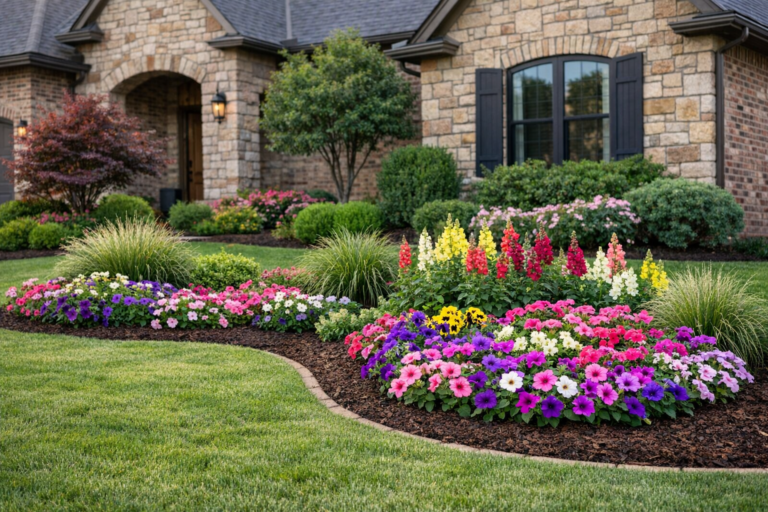
Annual Flowers vs. Perennials in Norman, OK: Which Belongs in Your Flower Beds?
A lot of Norman homeowners reach out to us after scheduling flower bed maintenance and realizing mid-cleanup that the beds themselves are the real problem. The original plants have gotten leggy, stopped performing, or simply don’t match what the homeowner wants the yard to look like anymore. That moment, when the beds are cleared and the slate is fresh, is exactly when the question comes up: should we replant with annuals that change with the seasons, or put in perennials that come back on their own? Norman, OK sits in a climate zone with heavy clay soil, summer temperatures that regularly push past 100 degrees, and winters that can drop below 10 degrees Fahrenheit, all of which makes plant selection more consequential than it might be elsewhere. If you’ve been searching for annual flowers & plants norman, ok, you’re likely already in that decision-making window, and August is actually a smart time to be thinking about it. Fall color in central Oklahoma doesn’t plant itself.
For most Norman, OK homeowners, annual flowers offer more control over seasonal color and curb appeal, while perennials offer long-term value with less replanting. The right choice depends on your maintenance tolerance, your budget cycle, and how much visual impact you want throughout the year. Many properties benefit from a deliberate mix of both.
Key Takeaways
- Annual flowers give you maximum color flexibility season to season, but they require replanting at least twice a year in central Oklahoma’s climate.
- Perennials return each year and reduce replanting costs over time, but most have a shorter bloom window than annuals.
- Norman’s clay-heavy soil and wide temperature swings make plant selection and bed preparation especially important for either option.
- A mixed planting strategy, annuals for color and perennials for structure, is what we most often recommend for Norman properties.
- Timing matters: fall annuals for Norman should go in between late August and mid-September to establish before cooler temperatures arrive.
Option A: Annual Flowers and Plants
Annuals complete their full life cycle in a single growing season. You plant them, they bloom, they finish, and you replace them. That sounds like more work, and it is, but it also gives you something perennials rarely can: consistent, dense color across the entire season you’re targeting.
In Norman, we typically work with two annual planting windows. Spring annuals like petunias, vinca, and pentas go in after the last frost risk passes, usually late April. Fall annuals like ornamental kale, snapdragons, and pansies go in during late August through mid-September, which is right where we are now. Both windows are opportunities to completely refresh the look of a bed.
Pros of annuals:
- Dense, reliable color for the full season they’re planted in
- Full design flexibility, you can change colors, textures, and arrangements each cycle
- Easier to match annuals to a specific curb appeal goal or home exterior
- Problems don’t carry over, if something doesn’t perform, you start fresh next season
Cons of annuals:
- Require replanting at least twice a year for year-round color
- Ongoing material and labor costs each season
- More vulnerable to Norman’s summer heat spikes if not selected carefully
Option B: Perennials
Perennials establish a root system and return each growing season without replanting. Over a three-to-five year window, they typically cost less per season than annuals because the plant investment is front-loaded. They also tend to spread and fill in over time, which can reduce maintenance needs in established beds.
In Norman’s climate, reliable perennials include black-eyed Susans, coneflowers, salvia, and daylilies. These plants handle Oklahoma’s heat, tolerate the occasional drought stretch, and come back dependably after winter. The tradeoff is that most perennials bloom for only a portion of the season, leaving gaps in color that annuals would fill.
Pros of perennials:
- Return each year without replanting, reducing long-term labor
- Often more drought-tolerant once established
- Spread and fill beds over time, creating a fuller look naturally
- Better suited for low-maintenance property owners
Cons of perennials:
- Most bloom for only 4 to 8 weeks per season, leaving color gaps
- Require more patience, the first year is often underwhelming
- Harder to change the look of a bed once perennials are established
- Some varieties struggle in Norman’s clay soil without proper bed preparation
What Are the Key Differences Between Annuals and Perennials?
The clearest difference is the replanting cycle. Annuals demand regular investment in time and materials. Perennials front-load the cost and reduce replanting, but they don’t give you the same season-long color density. Here’s how they compare across the factors that matter most to Norman homeowners:
Color impact: Annuals win. A well-planted annual bed stays in bloom from the day it goes in until the season ends. Perennials cycle in and out of bloom.
Long-term cost: Perennials generally cost less over a multi-year period once established. Annuals carry ongoing seasonal costs. Pricing for either option depends on the size of your beds and what you’re planting, so we always recommend a custom estimate rather than working from general figures.
Maintenance: Annuals need seasonal replacement. Perennials need dividing and cleanup, but less often. Our flower bed maintenance service can support either approach.
Design flexibility: Annuals give you a clean slate every season. Perennials lock in your palette for years at a time.
What Works Better for Annual Flowers & Plants Norman, OK Specifically?
Norman’s climate creates some specific conditions worth understanding. The soil in much of the city, especially in neighborhoods near the University of Oklahoma campus and south toward Brookhaven, runs heavy with clay. Clay retains moisture but drains poorly, which can cause root rot in plants that aren’t selected for those conditions. It can also bake hard in summer heat, which stresses shallow-rooted annuals.
Norman also sits in a climate zone that swings hard. Summers regularly push past 100 degrees, and winters can drop below 10 degrees Fahrenheit. That range eliminates a lot of plants that perform well in milder regions. The annuals and perennials that do well here are ones specifically selected for central Oklahoma’s conditions, not just general zone recommendations.
We’ve written more about how central Oklahoma’s climate affects plant selection in our post on annual flowers and plants in Edmond, OK, and many of those same factors apply directly to Norman properties.
For homeowners who want structure beyond just the plants, pairing flower beds with decorative borders helps define the planting area and keeps beds looking intentional regardless of what’s blooming at any given time.
What We Typically Recommend for Annual Flowers & Plants Norman, OK
For most Norman properties, we recommend a mixed approach: perennials as the structural backbone of a bed, with annuals filling in color for each season. This gives you the long-term value and drought tolerance of established perennials, while the annuals keep the beds looking full and intentional even during the weeks when perennials aren’t in bloom.
Right now, in August, the most time-sensitive move is planning your fall annual installation. Pansies, snapdragons, and ornamental kale all need to go in before mid-September in Norman to establish before cooler temperatures arrive. If you wait until October, you lose a significant portion of the fall color window.
If your beds need a full reset before any planting happens, our flower bed maintenance process in Norman is usually the right starting point. Clean beds, proper edging, and fresh mulch set the stage for either annuals or perennials to perform the way they should.
For homeowners who want to see what a full landscape design and installation process looks like, we’re happy to walk through that as well. Annual color is one piece of a larger outdoor picture, and it works best when it’s planned alongside the other elements of your yard.
If you’re ready to talk through what annual flowers & plants norman, ok looks like for your specific property, reach out to our team and we’ll put together a recommendation based on your beds, your goals, and your timeline.
Frequently Asked Questions
When should I plant fall annuals in Norman, OK?
Late August through mid-September is the target window for fall annuals in Norman. Pansies, snapdragons, and ornamental kale all need several weeks of mild temperatures to establish before the first cold nights arrive. Planting too late shortens the color window significantly and can leave plants stressed before they’ve had a chance to root in.
Do annuals or perennials handle Norman’s clay soil better?
Neither performs well in untreated clay without some bed preparation first. Perennials that are native or adapted to central Oklahoma, like black-eyed Susans and coneflowers, tend to handle clay better once they’ve established a deeper root system. Annuals are more sensitive to drainage issues and benefit from amended beds. Our flower bed maintenance service addresses soil and drainage conditions before any planting begins.
How often do I need to replant if I choose annual flowers & plants norman, ok?
Most Norman homeowners replant twice a year: once in late April or early May for spring and summer color, and again in late August or September for fall color. Some annuals, like vinca and pentas, perform well through the full summer season without needing replacement mid-cycle. Your specific replanting schedule depends on which varieties you choose and how your beds are maintained.
Can I mix annuals and perennials in the same bed?
Yes, and this is actually the approach we recommend most often for Norman properties. Perennials provide structure and return each year, while annuals fill in color during the weeks when perennials aren’t blooming. The key is planning the layout so annuals have room to perform without being crowded out as perennials spread over time. A well-designed mixed bed can look intentional and full across every season.