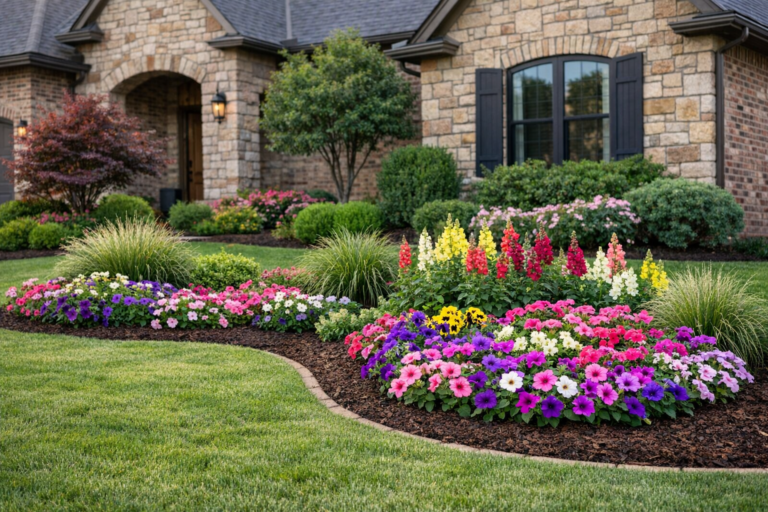
Fall Annual Flowers in OKC: When to Plant
Fall annual flowers in Oklahoma City perform best when they are installed after the worst summer heat begins to ease, not simply when the calendar turns to September. The right transition starts with healthy beds, dependable drainage, and plants selected for cool weather. A short wait for better conditions can matter more than rushing to be the first property with a new color display.
For homeowners and property managers, that means September is a planning and observation month. Watch daytime temperatures, evaluate what survived summer, confirm irrigation coverage, and decide where seasonal color will have the most visual impact. Scissortail Landscaping provides annual flower and seasonal color installation throughout Oklahoma City and nearby communities, with each display planned around the site rather than a fixed planting date.
Key Takeaways
- Do not remove healthy warm-season color just because September has arrived.
- Install cool-season annuals when temperatures begin to moderate and the bed can drain well.
- Put the strongest color near entrances, walks, patios, signs, and other high-visibility areas.
- Prepare the entire root zone before planting instead of hiding poor soil beneath fresh mulch.
- Coordinate seasonal color with irrigation, existing perennials, and ongoing bed care.

Let Weather, Not the Calendar, Set the Date
Central Oklahoma can stay hot well into September. Pansies, violas, ornamental kale, snapdragons, and other cool-season choices are built for milder conditions. Planting them while afternoons still feel like midsummer can cause unnecessary stress, frequent watering demands, and weak establishment.
Oklahoma State University Extension advises planting cool-season annuals when temperatures begin to cool. Its Oklahoma fall gardening guidance names pansies, ornamental cabbage or kale, snapdragons, and dusty miller as fall options. That is a useful plant list, but the phrase “when temperatures begin to cool” is the more important planning instruction.
A good installer looks at the forecast, soil moisture, sun exposure, and condition of the current display. A bed against a west-facing wall may remain hot long after a bed with morning sun becomes comfortable. The planting schedule can vary across one property for that reason.
Decide Whether the Existing Display Is Finished
Some summer annuals still look full and colorful in early fall. If they are healthy, removing them immediately may shorten the useful life of a strong display. Other beds may already be stretched, thin, or inconsistent because of heat, irrigation problems, or plant decline.
Use three questions to guide the transition:
- Does the current planting still look intentional from the street or main approach?
- Are the plants healthy enough to remain attractive for several more weeks?
- Can the bed be prepared properly without conflicting with an event or maintenance schedule?
This is where professional flower bed maintenance supports a better decision. Cleanup, pruning, weed removal, mulch evaluation, and plant health checks can reveal whether a full replacement is appropriate or whether a targeted refresh will work.
Build the Display Around How the Property Is Seen
Fall annual flowers work best as deliberate focal points. Spreading a small plant budget thinly across every bed often creates less impact than concentrating color where people naturally look.
Prioritize arrival points
Front walks, porch approaches, driveway turns, monument signs, and mailbox beds usually deserve the strongest color. On larger Oklahoma City properties, the view from the street may require broader masses of one or two colors. In a courtyard or patio, smaller groupings and finer texture can be appreciated at close range.
The Oklahoma City service area page shows how seasonal planting fits within a wider landscape that may also include borders, lighting, hardscapes, and drainage. Color should support those permanent elements instead of competing with them.
Match scale to the setting
Tiny blocks of mixed color can disappear against a large home or commercial frontage. Repeating a limited palette gives the eye a clear pattern. Taller snapdragons can provide a backdrop, while pansies or violas create a lower band of color. Ornamental kale can add structure when the goal is texture as much as bloom.
Plan for the view after dark
If entrances and walks are lit, place color where existing fixtures can reveal it without glare. Seasonal planting and lighting should be coordinated during the broader landscape design and installation process, especially when beds are being reshaped or new borders are planned.
Prepare the Bed Before the First Plant Goes In
A fresh surface does not correct compacted soil, trapped water, or shallow planting depth. Before installation, remove spent plant material and weeds, then inspect the soil below. The bed should accept water without staying saturated around new roots.
Check drainage and grade
Cool-season annuals need moisture, but they do not benefit from standing water. Downspouts, roof runoff, low edges, and compacted areas can keep one section wetter than the rest. Correct obvious flow problems before planting. If the issue extends beyond the bed, seasonal color may need to wait until the larger drainage condition is understood.
Improve the root zone
Loosen the planting area and blend amendments according to actual soil condition rather than adding a thin layer of soft material on top. New transplants need contact with prepared soil around their root balls. Avoid planting too deep or burying crowns under mulch.
Inspect irrigation coverage
Run the irrigation zone before installation. Look for blocked spray, overspray onto pavement, leaks, and dry corners. Planting a dense display over an uneven watering pattern almost guarantees uneven performance.
Choose Plants for Exposure and Maintenance
The best plant is not just the one with the preferred color. It must also fit the bed’s light, wind, moisture, and maintenance pattern.
Pansies and violas are familiar cool-season anchors. Snapdragons add height, ornamental kale adds bold texture, and dusty miller provides silvery foliage that can connect several flower colors. Availability changes through the season, so the final palette should be based on healthy stock and site compatibility.
The existing guide to annual flowers versus perennials in Norman explains the broader difference between short-term color and returning structure. In many beds, perennials and shrubs form the permanent framework while annuals fill planned openings. That approach keeps a fall refresh from turning into a complete redesign twice each year.
Water for Establishment, Then Adjust
Newly installed annuals need attentive watering while roots settle into the surrounding soil. The goal is even moisture, not constant saturation. Check the root zone rather than judging only by the top of the mulch.
As temperatures cool and plants establish, irrigation usually needs adjustment. A schedule carried over from summer may apply more water than the bed can use. Continue checking after rain because one wet section can coexist with a dry area under an eave or dense canopy.
Keep mulch away from plant crowns and avoid piling it around stems. Mulch should support moisture management and a finished appearance, not bury the plants. Remove fallen leaves that mat over low-growing flowers, and replace individual plants only after checking whether the cause was water, shade, disease, or physical damage.
Use a Simple Fall Color Planning Checklist
Before approving a layout, confirm the following:
- The planting window reflects current conditions, not a preset date.
- Healthy summer plants have been evaluated before removal.
- The bed drains and irrigation reaches every planting zone.
- Plant heights and colors fit the main viewing distance.
- Permanent shrubs and perennials have room for future growth.
- The care plan defines watering, cleanup, and replacement expectations.
This checklist keeps the conversation focused on performance as well as appearance. It also gives the installer and property owner a shared picture of what the finished display should accomplish.
Plan Seasonal Color With the Whole Landscape in Mind
Fall annual flowers can refresh an Oklahoma City property quickly, but the best displays are not isolated decoration. They reinforce entrances, complement the home, fit permanent plantings, and respond to the actual conditions in each bed.
If you want a site-specific plan, contact Scissortail Landscaping to discuss the planting areas, current bed condition, and the look you want for fall. Reach out today, and the team can help determine the right installation window for your property.
Frequently Asked Questions
When should fall annual flowers be planted in Oklahoma City?
Plant when the strongest summer heat has eased and conditions suit cool-season annuals. The exact date can change by exposure and forecast, so evaluate the bed and weather instead of relying on one calendar day.
Which annual flowers handle Oklahoma’s cool season?
Pansies, violas, snapdragons, ornamental kale, and dusty miller are common options. The best mix depends on sun, drainage, color goals, plant availability, and how the bed will be maintained.
Should healthy summer flowers be removed in September?
Not automatically. If warm-season annuals still look healthy and intentional, they may remain useful until conditions improve for cool-season replacements. A targeted cleanup can sometimes extend the display.
How often should new fall annuals be watered?
Water closely during establishment, then adjust as roots settle and temperatures cool. Check soil moisture at root depth, account for rainfall, and avoid leaving low areas saturated.