
How Flagstone Patio Installation Works in Deer Creek, OK
Spring is the busiest season we see for outdoor living projects in Deer Creek, OK, and April is typically when homeowners start making real decisions rather than just browsing. After a winter of heavy rain and freeze-thaw cycles, backyards in this area tend to show their weaknesses, low spots that hold water, bare patches where grass refuses to recover, and concrete slabs that have shifted or cracked under Oklahoma’s clay-heavy soil. A flagstone patio Deer Creek homeowners commission this time of year is not just an aesthetic upgrade. It is a structural solution to outdoor spaces that have been quietly failing for seasons. Understanding how the process actually works, from the ground up, helps you make a smarter decision about what you are investing in.
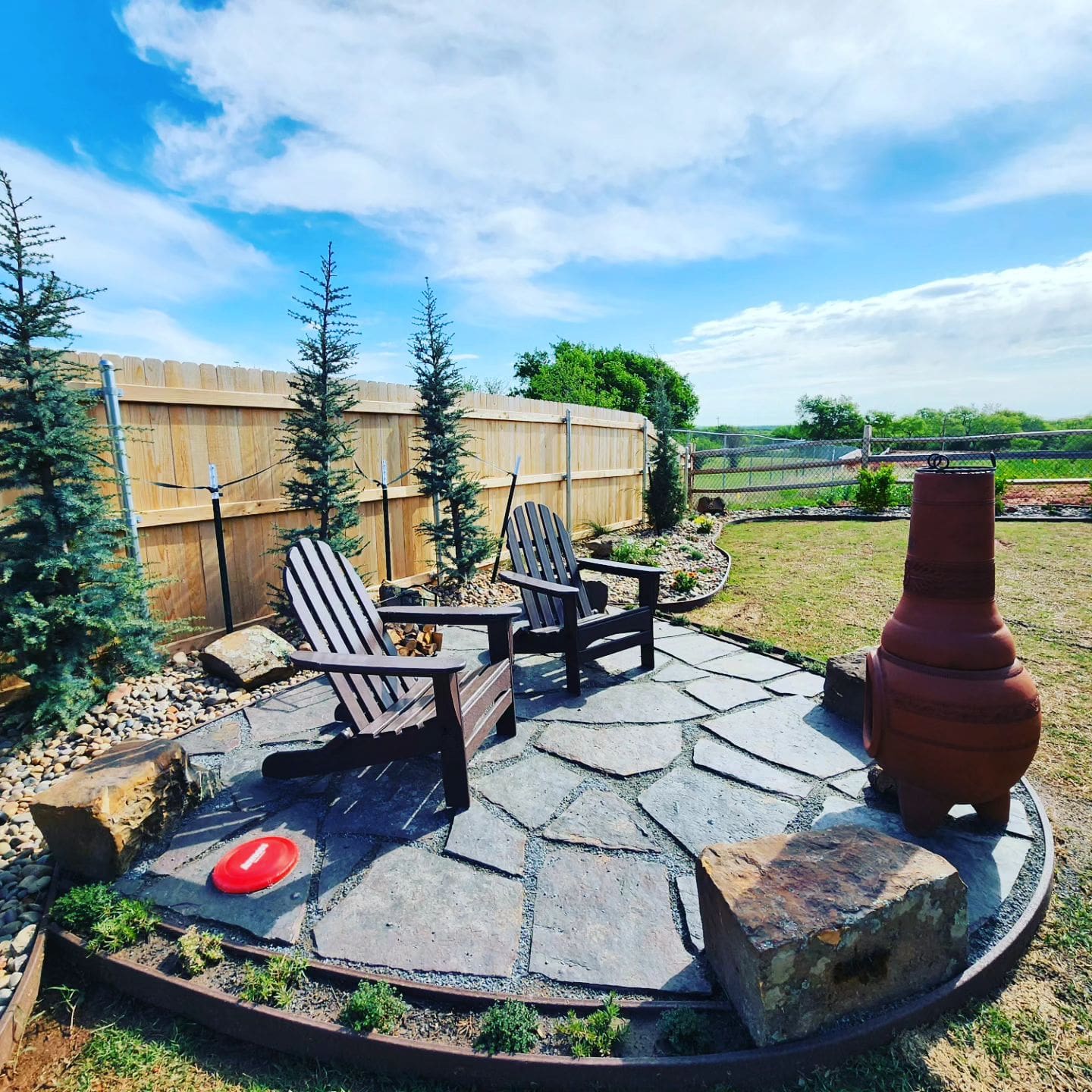
What Goes Into a Flagstone Patio Installation
Flagstone is a broad category, not a single product. The stones we use most often in this region are Oklahoma sandstone, limestone, and quartzite, each with different surface textures, weight tolerances, and color ranges. Sandstone is particularly popular in central Oklahoma because it blends naturally with the warm, reddish-brown tones common to this landscape. Quartzite holds up better under heavy foot traffic and resists moisture absorption more effectively, which matters in areas that see standing water after heavy rain.
The installation method depends on the intended use and the site conditions. Dry-laid flagstone sits on a compacted gravel and sand base without mortar. This method allows for natural drainage and some flexibility as the ground shifts seasonally, which is a real advantage in Oklahoma’s expansive clay soils. Mortared flagstone is set on a concrete base with mortar filling the joints, which creates a more rigid, formal surface. Both approaches have legitimate uses. We evaluate the site, the drainage pattern, and how the space will be used before recommending one over the other.
If the area has existing drainage problems, we address those before any stone goes down. Laying a beautiful patio over a poorly draining base is one of the most common mistakes we see corrected on second installs. Our drainage solutions team often works alongside the hardscape crew on these projects, especially in yards where water has been pooling near the foundation or along fence lines.
Why Flagstone Patio Deer Creek Projects Require Site-Specific Planning
Deer Creek sits in the northern part of the Oklahoma City metro, and the soil composition here tends toward heavier clay content than you find further south near Norman or Goldsby. Clay soil expands when wet and contracts when dry, and that movement is one of the primary reasons hardscaping fails prematurely in this area. A flagstone patio that was installed without adequate base preparation will show gaps, rocking stones, and uneven surfaces within a few years, sometimes sooner after a wet winter like the one we just came out of.
The base preparation for a flagstone patio Deer Creek crews build in this area typically involves excavating four to six inches of native soil, adding a compacted crushed limestone base, and then a layer of coarse sand before any stone is placed. On mortared installations, we pour a concrete slab first and allow it to cure before setting stone. The depth and composition of that base is not a shortcut we take, because the soil movement here will find any weakness in the foundation.
Slope and grading also matter more than most homeowners expect. We build a slight pitch into every patio surface, typically one-quarter inch of drop per foot, to direct water away from the structure and toward the yard or a designated drainage point. On larger projects, we sometimes integrate dry creek beds or channel drains at the patio edge to manage runoff more deliberately. If the yard has significant elevation changes, retaining walls may be part of the same project scope.
What to Expect During the Build Process
A standard flagstone patio installation in Deer Creek takes two to four days for most residential projects, depending on square footage, site conditions, and whether we are integrating other features. The first day is almost entirely site preparation: marking the layout, excavating, and compacting the base layers. This is the part of the process that does not look impressive in progress photos but determines everything about how the finished patio performs.
Stone selection and placement happen on day two, and this is where experience matters most. Flagstone is not a uniform product. Each piece has a different shape, thickness, and edge profile, and fitting them together tightly requires reading the stone and adjusting the sand bed under each piece individually. We cut stone on-site with a wet saw or angle grinder to fit edges and corners cleanly. Rushing this stage produces gaps and an uneven surface that becomes a tripping hazard over time.
Jointing comes last, whether that is polymeric sand swept into the gaps on a dry-laid patio or mortar applied and tooled on a mortared surface. Polymeric sand hardens when wet and resists ant infiltration and weed growth better than regular sand. On mortared patios, we seal the surface after the mortar cures, which helps protect the stone from Oklahoma’s intense summer UV exposure and the freeze-thaw stress that returns each winter.
Many of our clients pair the patio with landscape lighting, a pergola or pavilion, or a fire pit to complete the outdoor living space. If those additions are planned from the start, we can coordinate conduit runs and structural footings during the patio build rather than retrofitting them later. Our step-by-step landscape design process covers how we approach these multi-feature projects from the planning stage forward.
How to Know If Your Yard Is Ready for a Flagstone Patio
The clearest sign that a flagstone patio makes sense for your property is a backyard that you are not using because it lacks a functional surface. Grass areas that stay muddy after rain, bare dirt near the back door, or an aging concrete slab that has cracked and settled are all situations where flagstone is a practical upgrade, not just an aesthetic one. If you have been considering concrete additions as an alternative, our post on choosing the right patio material for Oklahoma weather breaks down how those two options compare in this climate.
April is genuinely one of the better months to start a flagstone patio Deer Creek project. The ground has thawed and dried enough for excavation, temperatures are mild enough for mortar to cure properly, and finishing the build before summer means you have the full warm season to use the space. Scheduling also tends to open up as the spring rush builds toward May and June, so lead times are shorter right now than they will be in six weeks. A conversation with our team about your site is the most useful first step, because the specifics of your yard, its grade, its drainage, and its sun exposure, shape every decision that follows.


